


Key Takeaways
- Mindful eating can help you enjoy holiday meals while staying connected to hunger and fullness cues.
- Real-time glucose data reveals how your body responds to traditional holiday foods.
- Slowing down, pairing carbs with protein and fiber, and checking in with your body can support better blood sugar balance.
- Viewing your data without judgment helps you learn from your meals and make more informed choices moving forward.
- Signos can support your long-term health goals with personalized metabolic insights during the holidays and every day.
that {{mid-cta}}
Thanksgiving is one of the few days a year when second helpings, family recipes, and rich casseroles are basically expected. And while there’s nothing wrong with enjoying your favorite holiday foods just for fun, it’s also okay to get curious about how those choices impact your body. We believe food is meant to be both enjoyable and nourishing, and thanks to tools like continuous glucose monitors, we can now see how our meals affect us in real time.
If you’ve ever wondered how to feel more in tune with your body on a day known for overindulging, Thanksgiving is the perfect time to experiment with mindful eating while getting metabolic feedback.
What Mindful Eating Really Means

Mindful eating is more than just a trendy buzzword. It’s a powerful tool for improving your relationship with food. At its core, mindful eating means learning to slow down during mealtime, tuning into your hunger cues, and paying attention to how food makes you feel. That could mean noticing the comforting aroma of green beans and stuffing, or savoring each bite of your favorite Thanksgiving casserole.
Mindful eating can be defined by paying close attention to your body’s signals, like hunger, fullness, satisfaction, and even your emotions while eating, so you can respond intentionally instead of eating on autopilot.
When you eat mindfully, you’re more likely to stop when you’re satisfied, not stuffed. And you’ll be better able to enjoy your holiday meal without guilt or regret. Research shows that practicing mindful eating can support portion control, reduce overeating, and help prevent post-meal energy crashes by keeping blood sugar more stable.1 This awareness naturally helps you eat at a more comfortable pace, enjoy your food more, and practice better portion control without rigid rules.
Metabolic Insights: What the Data Reveals
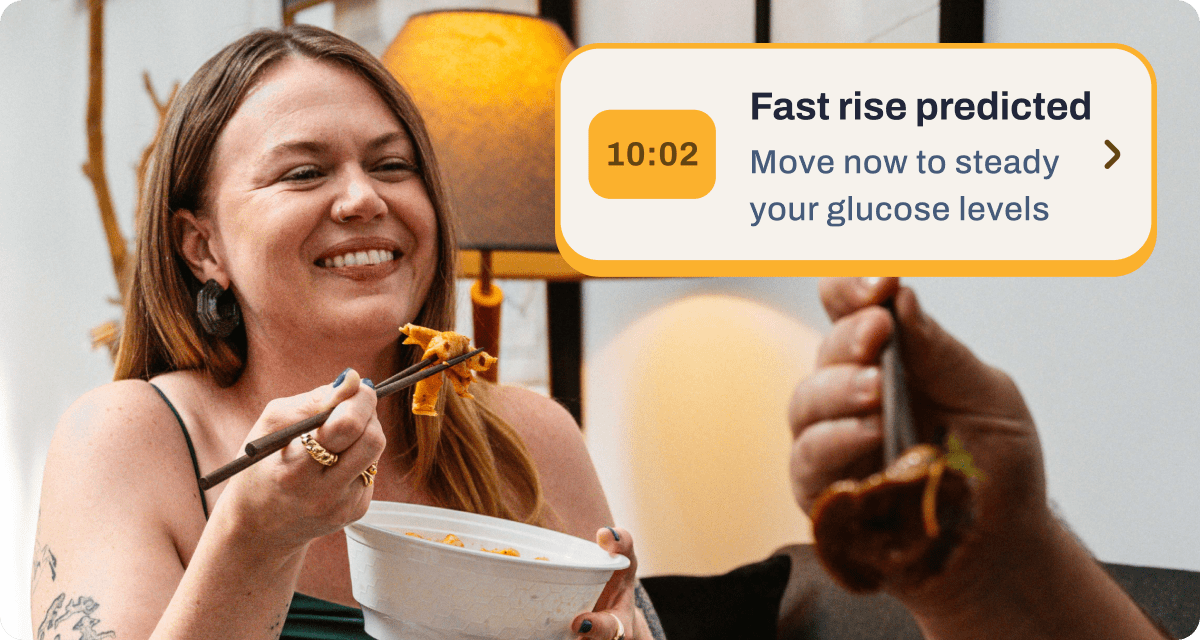
With the help of tools like continuous glucose monitoring and the Signos app, you can see exactly how your body responds to all the delicious food on your plate. For example, tracking your glucose before and after meals can show you how your body reacts to buttery stuffing, cranberry sauce, or a slice of pumpkin pie.
One of the most fascinating insights? Two people can eat the exact same Thanksgiving meal and have completely different blood sugar responses. That’s because our metabolic reactions are influenced by a variety of factors like sleep, stress, physical activity, and even gut health. So while your family member may feel energized after the sweet potato casserole, you might find yourself ready for a nap. Seeing this feedback in real time can help explain why certain foods leave you feeling great, while others leave you crashing mid-afternoon.
Remember, we want to collect this data without judgment. The goal isn’t to beat yourself up about your choices or your blood sugar. Rather, spend some time understanding your personal response and what you might like to do differently in the future.
Yet, it is true that certain holiday favorites are more likely to cause glucose spikes and energy dips, especially when eaten alone or in large portions. Sugary sauces like cranberry sauce, carb-heavy casseroles, or skipping the protein altogether can lead to quick rises in blood sugar followed by a steep drop. This often shows up as fatigue, cravings, or brain fog a few hours later. Knowing this can help you pair foods more wisely, adjust your portions, and even slow down to support more stable energy without missing out on your favorite holiday dishes.
How to Run Your Own Thanksgiving Experiment

If you’re curious about how your body responds to a big holiday meal, try this simple four-step experiment using Signos or a glucose monitor to collect your own real-time feedback. Think of it as a science experiment, and you are both the researcher and the participant.
Step 1: Start by noticing or logging your pre-meal glucose. This gives you a baseline before the feast begins.
Step 2: As you eat, slow down and take notice: What does the food taste like? How’s the texture? Are you starting to feel full?
Step 3: About 2 hours after your Thanksgiving dinner, check your glucose again. This post-meal reading can tell you a lot about how that specific combination of foods affected your blood sugar.
Step 4: Reflect on what you noticed. Did a certain dish lead to a spike? Did a protein-rich side help keep things steady? Use this insight to adjust pace, portions, or food pairings for future meals.
Most importantly, approach this experiment with curiosity, not criticism. You’re not doing this to “fix” anything. Rather, you’re learning more about how your body works. Every data point is an opportunity to understand your unique response, so you can make decisions that support your energy, metabolic health, and relationship with food.
Mindful Eating in Action: Small Shifts, Big Wins
Use these simple strategies to eat more mindfully during your holiday meal:
- Don’t skip meals earlier in the day. Eating a balanced breakfast and lunch helps you avoid arriving overly hungry, which can make it harder to eat mindfully and tune into hunger cues.
- Use your five senses. Take a moment to notice the colors, textures, smells, and flavors of your food. This will help you stay present and enjoy your meal.
- Pause between bites. Set your utensil down between bites to slow down your eating pace and give your body time to recognize fullness.
- Check in halfway through the meal. Ask yourself, “Am I still hungry or starting to feel satisfied?” This might feel weird at first, but it’s a habit you can practice at each meal.
- Pair your carbs with protein and fiber. This combo helps steady your blood sugar and can prevent that post-meal energy crash.
- Give yourself permission to enjoy. Eating mindfully isn’t about restriction; it’s about noticing what feels good physically and emotionally.
The Signos Connection
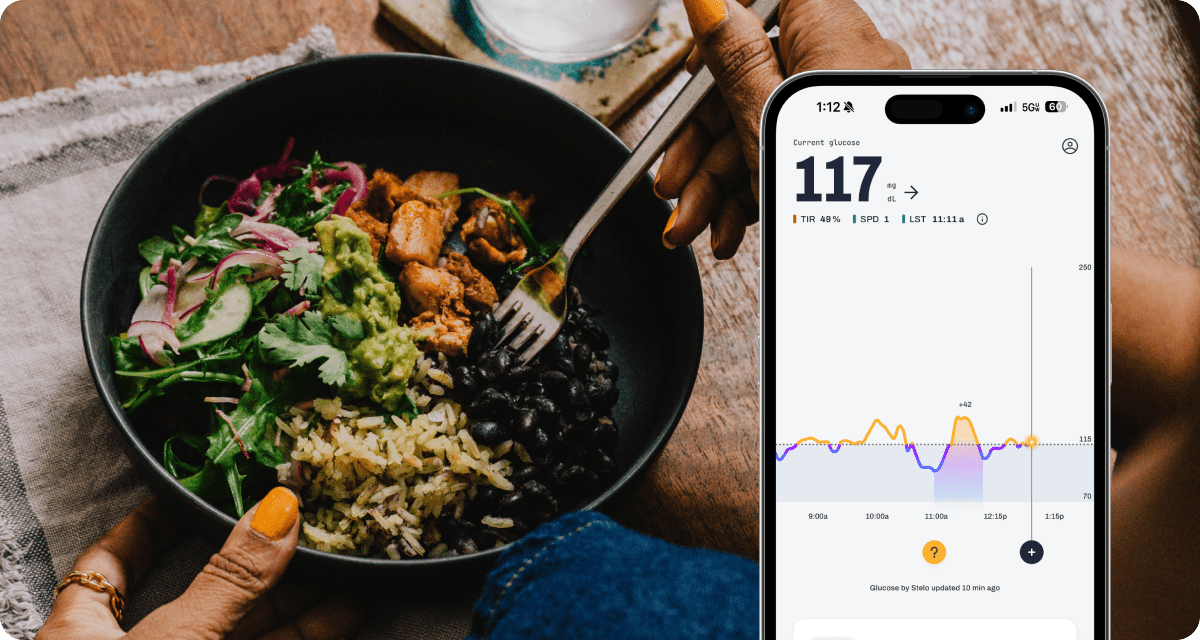
Mindful eating is powerful on its own, but pairing it with metabolic feedback from Signos can deepen your awareness and make mindful eating habits feel more second nature. Whether it’s a holiday meal or an everyday meal, or a snack, combining mindful eating with personalized data supports long-term wellness without falling into diet culture traps.
- See the impact of your choices in real time. Signos uses continuous glucose monitoring (CGM) to show how your body responds to your Thanksgiving meal, from the cranberry sauce to the mashed potatoes.
- Spot patterns in your eating habits. You may notice that certain food combinations, like pairing sweet potato with turkey and green beans, help keep your blood sugar more stable than eating those carbs on their own.
- Turn insights into action. Signos helps you make simple, informed changes based on your body’s response, whether it’s adjusting portion sizes, balancing meals with veggies and protein, or slowing down at mealtime.
The Bottom Line
With a mindful approach to eating and support from personalized metabolic data, you can enjoy your favorite holiday foods while staying in touch with your body’s signals. It’s not about restriction, but about making choices that support your metabolic health through the holiday season and beyond.
Learn More With Signos’ Expert Advice
Want to keep exploring how your eating habits affect your health? Learn how Signos helps improve overall health by turning glucose insights into everyday strategies. You can also dive deeper into the science of glucose levels on Signos’ blog. Whether it’s Thanksgiving Day or a random Tuesday, eating mindfully (with a little extra data) can be a powerful form of self-care.
Topics discussed in this article:
References
1. Miller, CK. Mindful Eating With Diabetes. Diabetes Spectr. 2017;30(2):89-94. doi:10.2337/ds16-0039
.webp)
.svg)








.svg)
.svg)
.svg)
.svg)
.svg)
.svg)
.svg)
