


Key Takeaways
- Define your fitness goals before looking at prices to avoid overpaying for unnecessary amenities like tanning beds, saunas, or fitness classes that don’t fit your schedule.
- Look past the low monthly rate to find any hidden fees (i.e., startup, annual, cancellation) and ensure the gym's location and hours support convenience and consistency.
- Check for high-quality equipment, a clean environment, and a welcoming vibe to ensure you feel comfortable and safe in the space.
- Consider using tools like Signos to optimize your routine by tracking how different workout types affect your energy and fitness goals.
that {{mid-cta}}
Your fitness goals are priceless, but unfortunately, the gym is not. That said, how do we put a price tag on our health? Finding an affordable gym can feel daunting, but this article provides a blueprint for finding one that fits your budget and delivers your best workouts. A budget-friendly gym can make staying active more accessible and successful year-round.1
However, it's important to look out for crucial details when spotting those low monthly rates or end-of-year deals. Make sure to evaluate what you really need, what each gym offers, and whether the environment genuinely aligns with your routine and aspirations. Here’s how to choose a gym that fits your budget, so your commitment to health doesn't break the bank as you enter a new year of resolutions and goals.
Start With Your Fitness Goals
Before you start comparing price tags, it’s incredibly important to understand your fitness goals and workout needs. Ask yourself these questions:
- Are you primarily focused on strength training?
- Do you need access to a treadmill in the winter?
- Are you looking for a personal trainer?
- Would group fitness classes help you stay motivated?
Your answers dictate the resources and equipment you need. For example, if you’re hoping to build muscle mass and strength, then you’ll need specialized equipment like squat racks, Olympic platforms, and bumper plates. If you are a beginner, then you might prioritize an inclusive environment, clear instructional signage, and accessible personal training options. Knowing your priorities upfront helps you filter out unnecessary amenities you shouldn’t have to pay for in a membership.
Evaluate the True Cost of a Gym Membership
A low monthly fee can be tempting, but it rarely represents the full cost of a gym membership. To truly find an affordable option, you need to meticulously analyze all the hidden charges buried in the fine print.
- Membership Rates: The advertised price can be misleading. Compare annual contracts vs. month-to-month options: one will save you money, while the other offers more flexibility.
- Startup and Annual Fees: Many gyms charge high startup fees or yearly maintenance fees, which can significantly inflate your total investment. Always ask about these fees before signing a contract.
- Cancellation Terms: Understand the cancellation terms, as some gyms have restrictive policies such as requiring 30–60 days’ notice or mandating an in-person cancellation during specific hours, which can make ending the membership difficult and costly.
- Hidden Costs: Watch out for extra charges required to use the facility, such as locker fees, towel services, parking fees, or recurring, non-optional "club enhancement" charges.
Amenities That Actually Matter

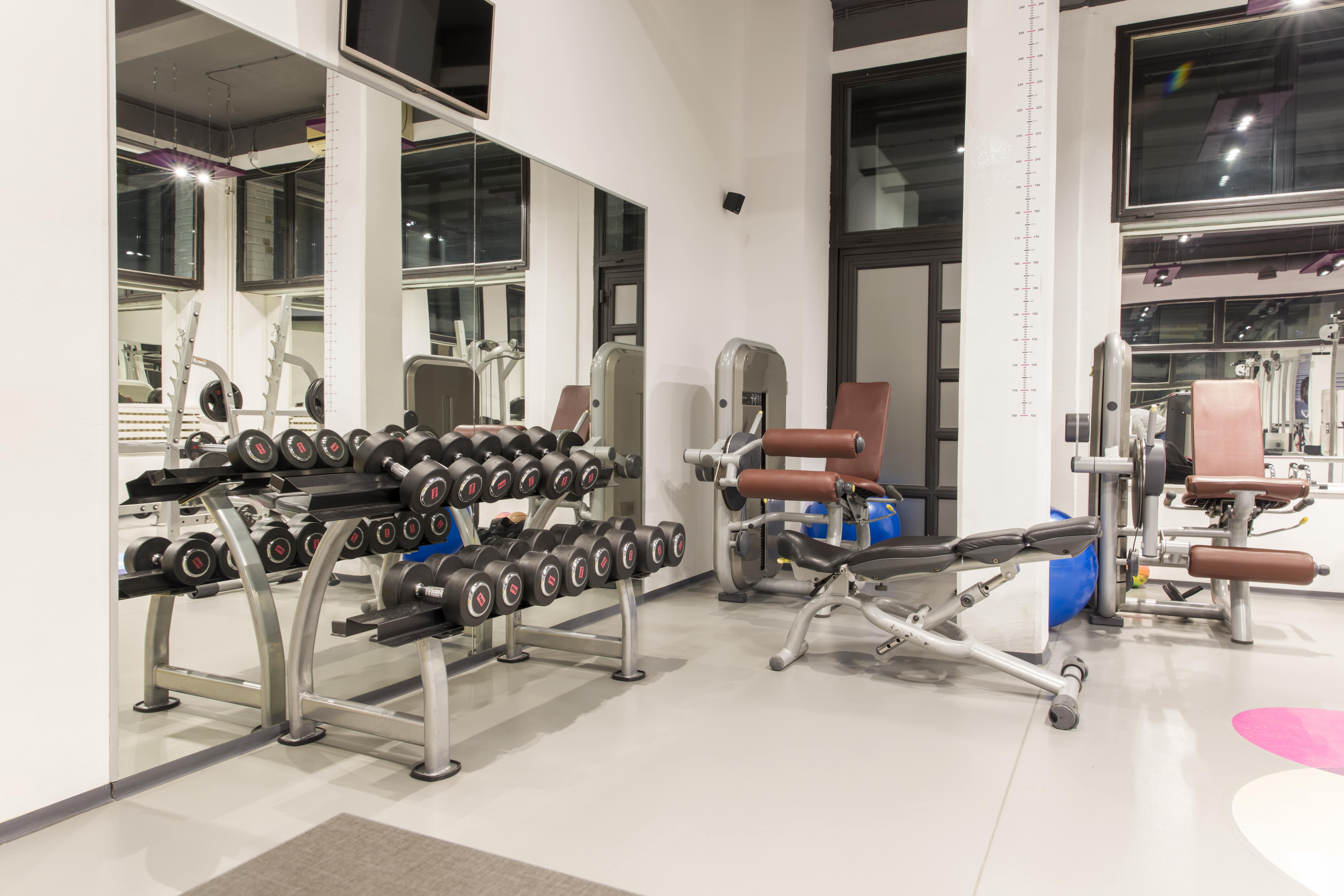
Once you have defined your goals and an appropriate price, it’s time to dissect the amenities. To get the most bang for your buck, look for a strength area that has enough racks, benches, dumbbells, and cable machines, as well as a large selection of clean, well-maintained cardio equipment. Check the group fitness class calendar to see if it fits your schedule and needs. If you prefer dynamic, functional training, then ensure there is adequate, open space with kettlebells, TRX, turf, etc.
Lastly, don’t forget the basics. A clean locker room, showers, reliable Wi-Fi for guided workouts, and 24/7 access are all essential for convenience and safety. You can avoid paying extra for premium amenities you won’t use, such as saunas and tanning rooms or the elite-level fitness classes, as they only add unnecessary cost to your membership for services you won’t use.
Location and Convenience Are Key
Regardless of the price and amenities, any gym is useless if you can't get there consistently or if excuses for not going are easy to make. Location and operating hours are critical to your long-term success, so make them a priority!2 A convenient distance from either home or your workplace removes a major barrier to fitting in time to exercise.
Before committing to a membership, drive or walk the route at the time you plan to work out to assess traffic and parking availability. Also, check the gym's operating hours compared to your personal schedule. If you are an early riser, a night owl, or work third shift, you may need a facility that offers 24/7 access.
Choosing a gym with hours and a location that easily integrates into your life ensures that your fitness routine is supported by convenience and consistency.
Tour the Gym Before Joining

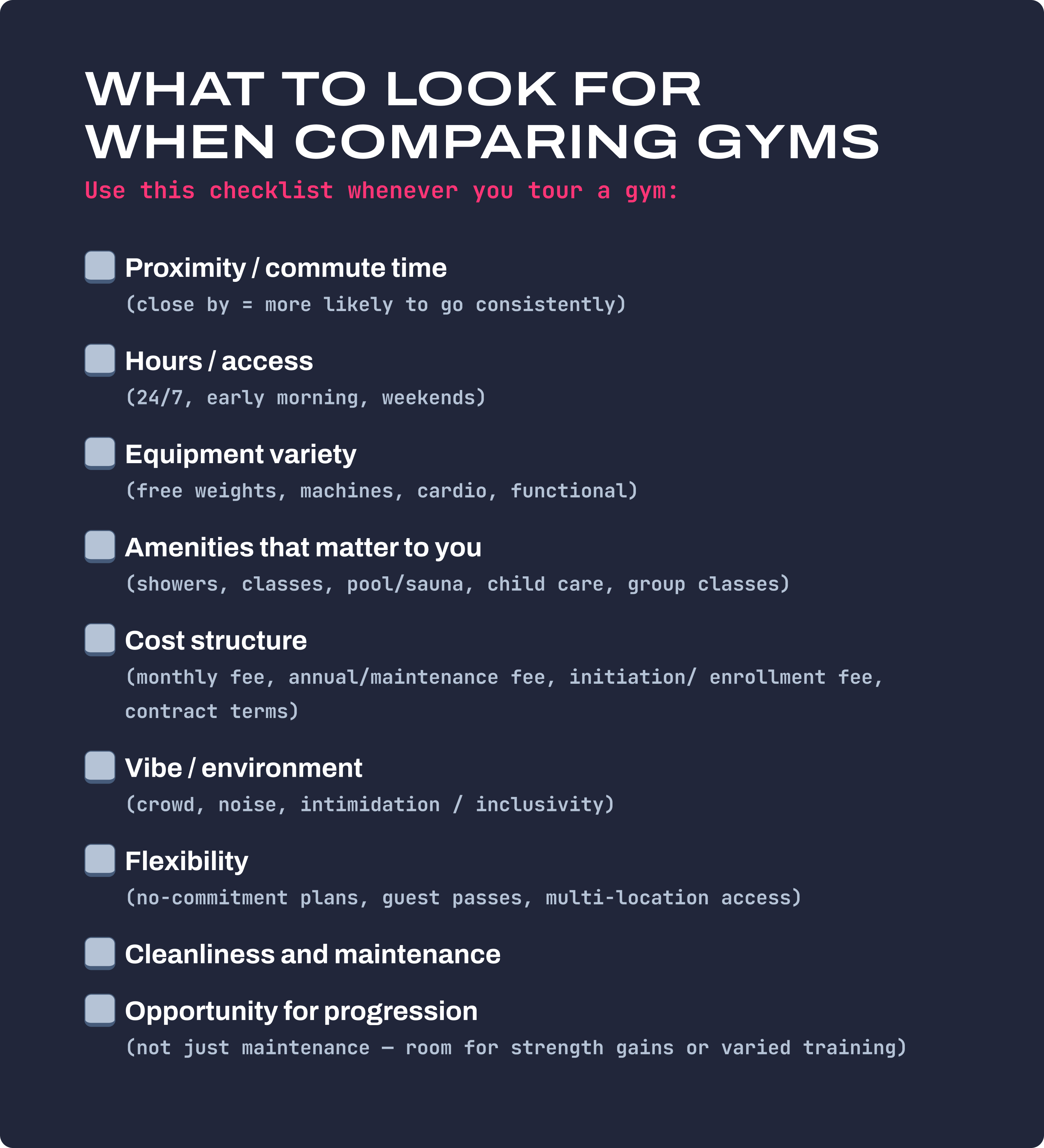
An orientation or walkthrough lets you experience the facility before you commit and ask any final questions about amenities, offerings, etc. When touring the gym, make sure to assess some of these qualities:
- Cleanliness of the gym and locker rooms.
- Condition of the equipment: ask whether it has been updated recently.
- Visit during your anticipated peak training time to see how crowded it is and if you can easily access the equipment you need.
- Staff friendliness and responsiveness to your questions.
- Pay attention to the temperature, airflow, and general atmosphere to ensure it’s a comfortable place to exercise.
- Assess the vibe - are people slamming weights, is the music appropriate, or does it feel accessible, welcoming, and beginner-friendly?
Consider the Training and Support Options

A 2025 study found that personalized and varied experiences, as well as social interventions, can positively affect exercise habit formation.3 If you’re hoping for access to a personal trainer or other support, then consider the following aspects in the gym you choose:
- Personal Training: Ask about the trainer's credentials, pricing, and whether a complimentary introductory session is offered.
- Group Accountability: Do they offer small-group training if you prefer something more affordable with a stronger social aspect?
- App Integration: Check if the gym syncs with wearable devices or offers its own digital programming to help track your training progress.
- Training Variety: If you’re using a CGM, a gym with varied equipment and classes can help you compare glucose responses to different workout types.
How Signos Can Support Your Fitness Routine at the Gym
.png)
Once you’ve found an affordable gym that fits your lifestyle, progress comes down to consistency and understanding how your body responds to exercise over time. Signos helps take the guesswork out of training by showing how your workouts and fueling choices impact your glucose, energy, and recovery.
With continuous glucose monitoring, Signos lets you see how different workout styles (strength training, cardio, or mixed-modality sessions) affect your blood sugar during and after your gym sessions. This real-time feedback helps you spot patterns like energy crashes after certain workouts or steadier glucose when you fuel or train differently.
Inside the app, Weekly Insights reports surface trends across your workouts, highlighting which training days lead to more stable energy and which may be pushing your body too hard. Using Context Logging, you can tag workouts, meals, and recovery days to understand how timing, intensity, and nutrition interact with your metabolism.
Signos also allows you to actively test what works best for your body, such as:
- Morning vs. evening workouts: Compare glucose stability and energy levels based on when you train.
- Strength-only vs. mixed-modality days: See which workout types support steadier glucose and better recovery.
- Fueling strategies: Test workouts fasted versus fueled, or protein-first meals before training.
- Recovery and rest days: Analyze how active recovery or full rest days affect overnight glucose and next-day performance.
By pairing an affordable gym with personalized metabolic feedback, Signos helps you train smarter, not harder, so every workout supports better energy, consistency, and long-term results.
The Bottom Line
Choosing an affordable gym is more than just the monthly price; it's about finding an inclusive space that makes consistency both realistic and enjoyable. By thoroughly evaluating equipment, contract terms, location, and the gym's overall environment, you’ll set yourself up for long-term fitness success without hurting your finances.
Pair your new gym with personalized metabolic insights from Signos, and you’ll finally build a workout routine that supports better glucose stability, energy levels, and strength for a healthier, stronger you.
Learn More About Signos’ Expert Advice
If you have more questions about improving your health, fitness, and nutrition, seek expert advice from a continuous glucose monitor and the Signos team. A continuous glucose monitor (CGM) can give you the insights to make smarter nutrition and exercise choices. The Signos app provides a unique, personalized program to help you reach your health goals.
Topics discussed in this article:
References
- Homonoff, T., Willage, B., & Willén, A. (2020). Rebates as incentives: the effects of a gym membership reimbursement program. Journal of Health Economics, 70, 102285.
- Sallis, J. F., Bull, F., Guthold, R., Heath, G. W., Inoue, S., Kelly, P., ... & Hallal, P. C. (2016). Progress in physical activity over the Olympic quadrennium. The lancet, 388(10051), 1325-1336.
- Demirci, E., Tuzun, E., Un, A. F., Sonmez, T. G., & Varol, O. (2025). From Occasional to Steady: Habit Formation Insights From a Comprehensive Fitness Study. arXiv preprint arXiv:2501.01779.
- Riseth, L., Lund Nilsen, T. I., Hatlen Nøst, T., & Steinsbekk, A. (2022). Fitness center use and subsequent achievement of exercise goals. A prospective study on long-term fitness center members. BMC Sports Science, Medicine and Rehabilitation, 14(1), 9.

.svg)



.jpg)


.webp)

.svg)
.svg)
.svg)
.svg)
.svg)
.svg)
.svg)
