


Key Takeaways
- Remember that consistency matters more than perfection, since setbacks are highly likely.
- While external goals can start a routine, they don’t sustain a new habit.
- If possible, remove all avenues for potential barriers.
that {{mid-cta}}
It's easy to dive headfirst into a new fitness program with sincere excitement and motivation. However, maintaining long-term momentum is the real challenge. If you find yourself caught in a cycle of daily gym attendance followed by weeks of absence, you're truly not alone. This article cuts through unrealistic “fixes” and delivers proven, actionable strategies designed to keep you inspired, committed, and motivated to make every workout and every goal achievable.
Why Motivation Isn’t Enough: What Actually Builds Consistency?

While motivation plays a crucial role, it is inherently unreliable for maintaining long-term consistency because it fluctuates by nature. If you expect to always feel excited about your workout, you'll fall off track when those feelings fade. Finding motivation in addition to forming a reliable workout routine is what ultimately builds consistency, provides stability to your physiological systems, and supports better metabolic health for life.1
Tip #1: Set Clear and Achievable Fitness Goals
"Getting fit" is often too vague a goal to inspire an actionable plan. Instead, try rephrasing it into a SMART goal. SMART is an acronym standing for Specific, Measurable, Achievable, Relevant, and Time-bound. For example, a SMART goal to “get fit” could be, “ I will do three 45-minute weight lifting sessions per week for the next four weeks." This level of clarity and direction allows you to track progress effectively and is one of the key factors in improving exercise adherence.2
Tip #2: Start Smaller Than You Think
Instead of thinking “more is better,” remind yourself that some is better than none. In fact, microworkouts of just 10–20 minutes are effective in reaching health and fitness goals.3 Examples of a microworkout include a 15-minute bodyweight circuit or simply walking briskly for ten minutes. The goal initially is to establish the habit of showing up, not the intensity of the session.
Tip #3: Use a Structured Program, Not Random Workouts

While any movement is better than none, relying on random workouts will feel like a path that goes nowhere fast. The solution is using a structured program where your workouts are pre-planned, built on progressive overload, and ensure all areas are properly stimulated with adequate recovery time. This progressive, structured approach leads to better, faster results than the more “ad-hoc” approach.4
Tip #4: Prioritize Strength Training for Long-Term Momentum
Prioritizing strength training can boost confidence and motivation by providing long-term momentum and faster progress. Studies show that those with type 2 diabetes experience increased muscle strength, better energy regulation, and improved glucose control as soon as 4-6 weeks into a weight-lifting program.5 The ability to track and see quantifiable, tangible results gives you proof that your new routine is worth showing up every single time.
Tip #5: Track Your Progress (Even Small Wins)
Don't just rely on what the scale tells you - keep track of the metrics that really matter. Big or small, all of your fitness journey wins are worth celebrating and will keep you inspired long term. If you’re targeting weight loss, energy levels, and glucose stability, the continuous glucose monitor (CGM) from Signos uses data to illustrate how your food choices and physical activity directly impact glucose response and recovery, providing immediate feedback that motivates you and keeps you moving (literally) towards your goals.
Tip #6: Make the Gym Easier to Get To
Choose a gym that is conveniently close to your home or workplace so the location fits seamlessly into your schedule and commute. Other strategies that can help when feeling busy include packing your gym bag the night before, laying out your workout clothes and pre-workout snack, or trying home workouts. Every small step you take to remove possible excuses only increases your chances for success in consistency.
Tip #7: Habit Stack Your Workouts
Like a set of dominoes, habit stacking places a new, desired action directly behind an existing one. Once initiated, the momentum of the first activity automatically gives momentum to the second. For example, you can plan a 30-minute gym session immediately after you drop your kids off at school. Or maybe you say, "After I finish my first cup of coffee, I will complete a 10-minute core workout." By linking the new workout habit to something that already takes place, it stops feeling like a separate, demanding chore, making it easier to fit into your routine even when you are crunched for time.
Tip #8: Build Accountability: Alone or with Others

When it’s just you, skipping a workout becomes easier to rationalize. However, when you enlist a workout buddy or sign up for a gym class, your follow-through dramatically improves. Research on exercise adherence has found that social support from peers, coaches, or group settings is a key factor for both healthy adults and those with chronic disease.2
If you enjoy a solo workout but still want the benefits of social support, you can also invest in a personal trainer or engage with communities online and in fitness apps. Knowing that someone else is expecting you, relying on you, or tracking your progress is often the critical factor that gets you out the door on days when motivation feels nonexistent.
Tip #9: Change Your Environment to Support Success
How you set up your environment plays a powerful role in exercise motivation. Create visual reminders, like keeping your gym clothes next to your bed, which can be incredibly helpful for making those early morning workouts happen.
To further elevate motivation and excitement, put together an energizing playlist or find an interesting podcast you can listen to only during your workouts. You’ll be surprised by how much the little cues around can help signal the right mood to exercise.
Tip #10: Embrace Intrinsic Motivation
While external rewards can be validating, they often aren’t enough. The true, sustaining force behind long-term consistency is finding intrinsic motivation. This is the deep satisfaction you feel from the activity itself, not necessarily how it makes you “look.”
When you recognize that exercise is a powerful tool for stress management, maintaining a healthy lifestyle, and building unwavering self-confidence, you stop viewing it as a punishment or a chore. It becomes something you look forward to because it is directly tied to your well-being. Feeling stronger and more capable fuels commitment much longer and much better than any temporary aesthetic goals.6
Tip #11: Overcome Common Barriers
Consistency often breaks down when we allow common barriers to derail us. One frequent hurdle is the lack of time or energy, which quickly leads to procrastination or convincing yourself to “just skip one day.” In those moments, remember that some exercise is better than none at all. Choosing a microworkout or sticking to a non-negotiable time for your activity helps combat the temptation of these intrusive thoughts.
When you find yourself asking, "Should I skip today?" keep in mind the goal is to show up even when you’re not in the mood. You’ll feel even more accomplished when you’re finished, saying instead, “I'm so glad I did that workout.”
Tip #12: Expect Setbacks (And Don’t Quit When They Happen)
Take tip #11 with an understanding that the other goal is “progress, not perfection.” Setbacks are a normal and unavoidable part of any long-term journey, especially when life is unpredictable. You will miss workouts because life will occasionally throw you off schedule. The true measure of success isn't avoiding setbacks entirely, but instead bringing kindness to yourself during the lapse and getting back on schedule as soon as possible. The faster you jump back in, the less momentum you lose, keeping you on track while missing the fewest beats along the way.
How Signos Helps You Build Consistent Movement Habits
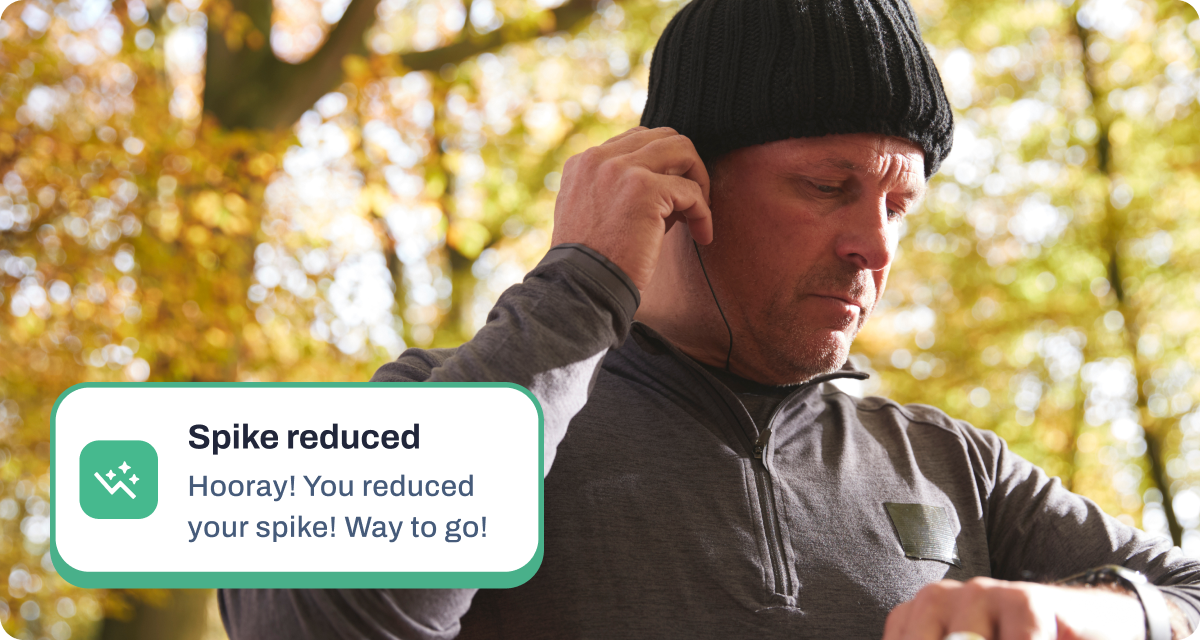
Signos adds real-time biological feedback to your workouts, turning movement into something you can see working. With continuous glucose monitoring, you can understand how different types of exercise affect your energy, recovery, and metabolic health, making it easier to stay consistent because the payoff is measurable.
Key Signos features that support consistency
- 24/7 Glucose Monitoring: See how workouts immediately lower post-meal spikes or smooth glucose variability throughout the day.
- Glucose State Zones: Visual cues (blue, purple, yellow, pink) help you understand when movement boosts energy, restores balance, or helps bring elevated glucose back down.
- Weekly Insights Report: Spot trends between workout frequency, timing, and steadier glucose patterns over time. Compare movement types (strength, cardio, walking, HIIT) and timing to see which routines support better recovery and metabolic stability.
- In-App Logging: Tag workouts to connect specific activities with glucose responses and energy levels.
Experiments to try
- Timing Test: Compare a morning workout vs. an evening workout and review which leads to smoother overnight glucose.
- Type Swap: Alternate strength training days with cardio or walking days to see which keeps you in the purple zone longer.
- Post-Meal Movement: Add a 10–15 minute walk after meals and observe how quickly glucose returns to baseline.
- Consistency Challenge: Track glucose variability across a full week of consistent workouts vs. a fragmented week to see the metabolic difference.
- Recovery Check: Note next-day glucose stability after rest days versus active recovery days.
By making the benefits of movement visible, not just felt, Signos helps reinforce the habit loop that turns workouts into a sustainable, rewarding routine.
The Bottom Line
A lasting fitness routine is not dependent on sporadic motivation but on building dependable habits around realistic goals. By implementing SMART goals, creating a supportive environment, and prioritizing consistent, small efforts, you shift your routine from a temporary “resolution” to a legitimate part of your lifestyle. Remember that consistency drives results, that progress over perfection matters, and that focusing on small changes or habit stacking can help sustain your gym routine all year long, even if the initial motivation wanes.
Learn More About Signos’ Expert Advice
If you have more questions on improving your health, fitness, and nutrition, seek the expert advice of the Signos continuous glucose monitor and the Signos team. A continuous glucose monitor (CGM) can give you the insights to make smarter nutrition and exercise choices. The Signos app provides a unique, personalized program to help you reach your health goals.
Topics discussed in this article:
References
- Shaw, K. L. (2015). Patient education, motivation, compliance, and adherence to physical activity, exercise, and rehabilitation. Pathology and intervention in musculoskeletal rehabilitation, 3, 1-24.
- Collado-Mateo, D., Lavín-Pérez, A. M., Peñacoba, C., Del Coso, J., Leyton-Román, M., Luque-Casado, A., ... & Amado-Alonso, D. (2021). Key factors associated with adherence to physical exercise in patients with chronic diseases and older adults: an umbrella review. International journal of environmental research and public health, 18(4), 2023.
- Gibala, M., & Shulgan, C. (2017). The One-minute Workout: Science Shows a Way to Get Fit That's Smarter, Faster, Shorter. Penguin.
- ALIYU, E. S. (2023). EFFECTS OF STRUCTURED AND UNSTRUCTURED PHYSICAL ACTIVITIES ON BIOCHEMICAL INDICES, DISEASES RISK SCORES AND COST OF CARE OF OVERWEIGHT AND OBESE ADULTS (Doctoral dissertation).
- Ishii, T., Yamakita, T., Sato, T., Tanaka, S., & Fujii, S. (1998). Resistance training improves insulin sensitivity in NIDDM subjects without altering maximal oxygen uptake. Diabetes care, 21(8), 1353-1355.
- Buckworth, J., Lee, R. E., Regan, G., Schneider, L. K., & DiClemente, C. C. (2007). Decomposing intrinsic and extrinsic motivation for exercise: Application to stages of motivational readiness. Psychology of Sport and Exercise, 8(4), 441-461.

.svg)




.jpg)



.webp)
.svg)
.svg)
.svg)
.svg)
.svg)
.svg)
.svg)
