

.png)
When it comes to blood glucose, food choices often come to mind. It’s true that carb-containing foods like pasta, potatoes, fruit, bread, and yogurt impact blood sugar. However, there’s more to blood glucose management than meets the eye.
Stress, sleep, and movement also play a role in blood sugar, even though we don’t always put two and two together. Continue reading to learn about what CGM users notice and how daily habits affect blood glucose over time.
How Stress, Sleep, and Movement Affect Glucose
Blood sugar is affected by stress, sleep, and physical activity in different ways. Regarding the effect of stress on blood sugar, physiological changes occur to ensure sufficient energy is available to respond to the stressor.1
Disruptions in circadian rhythms, inflammation, and various hormones associated with sleep lead to higher blood sugar and greater glucose variability.2
Exercise benefits blood glucose control by increasing insulin sensitivity. This makes it easier for muscle cells to use insulin, which transports glucose from the blood during and after exercise.3
Stress and Blood Sugar
.png)
Using a CGM provides powerful insights into the factors that affect blood glucose levels. Something CGM users notice is that stress causes unexpected glucose spikes. This effect of stress on blood sugar can stem from work deadlines, emotional conversations, financial stress, or getting stuck in traffic.
The stress response increases the amount of glucose available in your blood, ensuring you have enough energy to manage whatever is stressing you out.
Back in the caveman days, that stressor might have been an animal chasing you. However, nowadays, the body’s response is the same even though we don’t need extra blood glucose to sit in traffic.1
When stress glucose spikes occur, it’s common to have decreased energy when blood sugar eventually comes down.
Using a CGM makes it easier to identify the effect of stress on blood sugar. People who use a CGM often notice the following patterns:
- Rapid rises without eating
- Elevated plateaus
- Delayed spikes after eating
To track the relationship between stress and blood sugar, note when stress arises. You can also see how various stress-management techniques, such as breathing, walking, or reading, affect blood glucose. This is a powerful way to find out which tools work for you.
The Connection Between Sleep and Glucose Levels

Various aspects of sleep, such as insufficient sleep, poor quality, or going to bed too late, all affect metabolic health.
Sleeping for a short amount of time is associated with elevated cortisol levels. This hormone raises blood sugar. Inflammatory pathways are activated by poor-quality, low-quantity sleep, which contributes to elevated blood glucose levels.
Falling asleep late at night (after midnight) disrupts the circadian rhythm and affects metabolic health. As a result, hormones such as cortisol and melatonin are affected, increasing blood sugar levels.2
Furthermore, when tired the next day, you’re more likely to eat high-energy snacks and drink caffeine, which both affect blood glucose.
CGM patterns people notice with poor sleep and blood sugar include higher fasting blood sugar and slower glucose recovery the next day.
Using a CGM makes it easier to adjust daily habits to prioritize sleep. You can experiment with bedtime routines, focus on sleep consistency (instead of perfection), and use fasting blood sugar trends as a sign of sleep quality.
The Relationship Between Movement and Blood Sugar
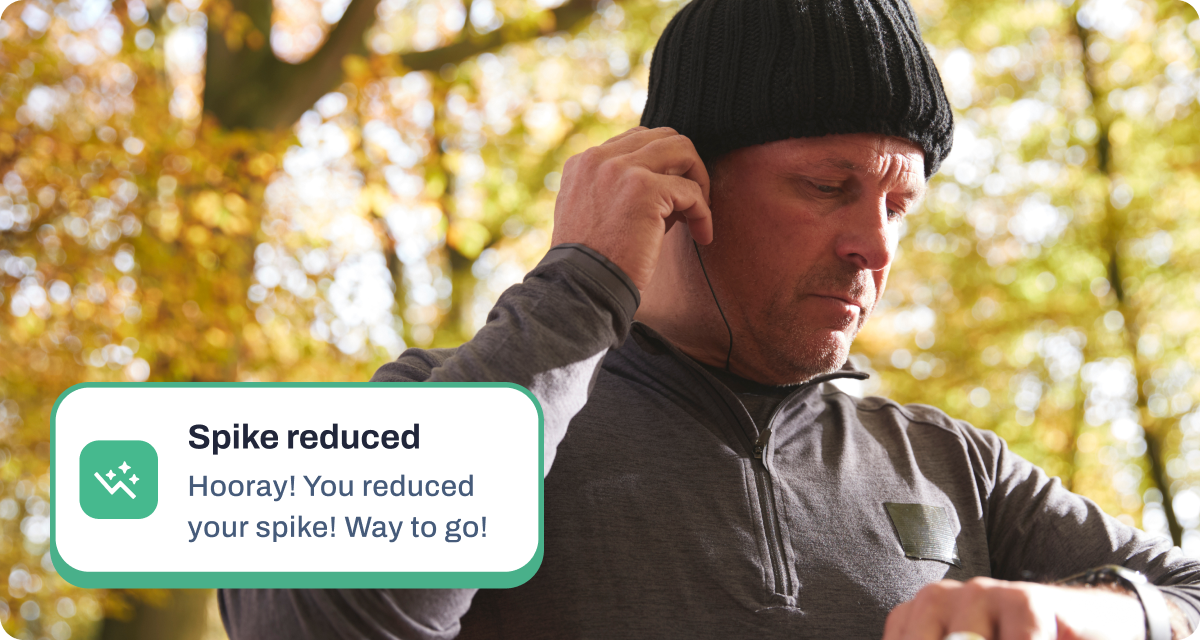
In addition to the body’s cells more easily taking up glucose from the blood, exercise helps insulin work more effectively. Reducing insulin resistance by increasing the body’s sensitivity to insulin may increase life expectancy.4
Without a CGM, it’s difficult to fully understand the connection between physical activity and glucose response.
CGM use has been shown to lead to increased physical activity and a reduction in HbA1c in patients with type 2 diabetes.
People who use a CGM often notice:
- Improved time in range (TIR), which also benefits HbA1c
- Better glucose variability (GV)
- Prevention of low and high blood sugar
- Faster decreases in blood sugar after exercise
Seeing the positive relationship between movement and blood sugar can help change people’s mindset around exercise. Instead of seeing it as a dreaded item on their “to-do list,” it becomes a tool to manage blood glucose.4
CGMs also show that something as simple as a post-meal walk can benefit metabolic health, and that an intense, long workout is not always necessary.
CGM Insights Reveal the Full Metabolic Picture
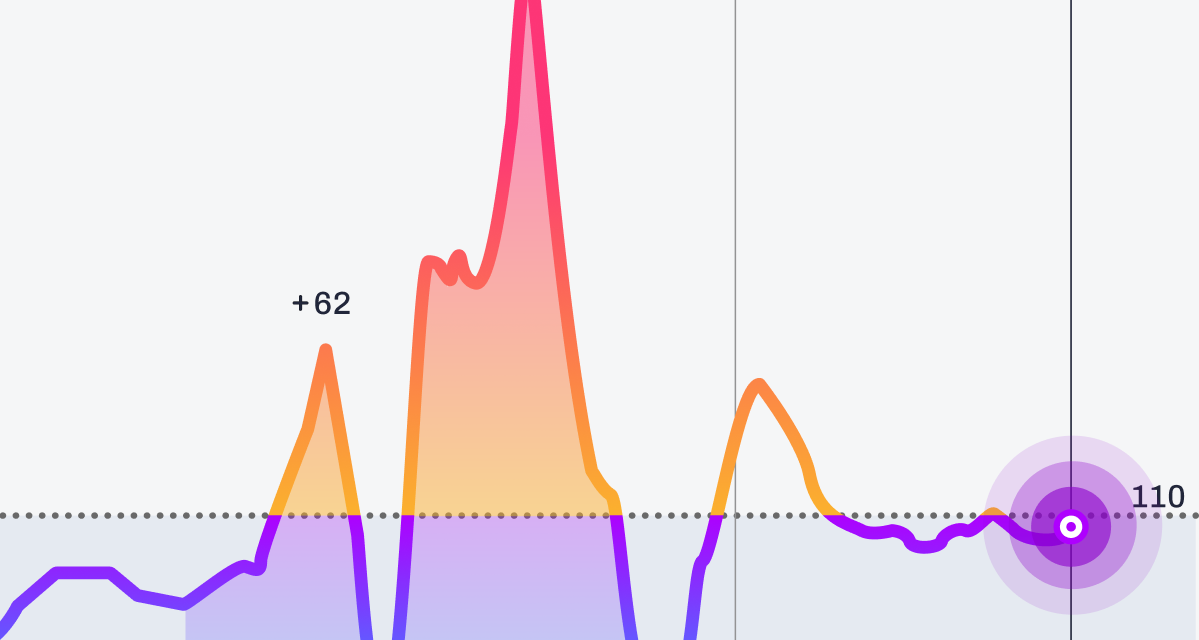
CGM data goes beyond food tracking to reveal how your entire lifestyle impacts blood sugar in real time. With Signos, members can see how factors like stress, sleep quality, timing of meals, and daily movement influence glucose patterns, often in ways that aren’t obvious without continuous data.
For example, a restless night may show up as elevated morning glucose, even before eating. A stressful meeting can trigger a spike similar to a high-carb snack. A short walk after meals may flatten what would otherwise be a sharp rise. These patterns are easy to miss when you’re only looking at occasional data points, but they become clear when you can see your full glucose curve throughout the day.
Signos turns these insights into action through experiments and Weekly Insights that help members connect cause and effect:
- Sleep experiments encourage earlier bedtimes or consistent wake windows and show that improved sleep supports more stable overnight and morning glucose levels.
- Movement experiments test the impact of short post-meal walks or light activity breaks, helping members see how even 5–10 minutes can reduce glucose spikes.
- Stress-aware insights highlight unexplained elevations and prompt reflection on workload, recovery, or mindfulness habits.
- Meal timing and composition experiments help members compare glucose responses to the same foods eaten at different times or paired with protein and fiber.
By pairing CGM data with habit tracking, visual glucose cues, and personalized insight reports, Signos helps members focus on small, repeatable lifestyle changes that add up over time. Instead of guessing what’s working, members can use real-time feedback to build habits that support steadier glucose, better energy, and long-term metabolic health.
How Signos Works to Improve Metabolic Health
Signos pairs glucose tracking with smart food logging and real support from registered dietitians to help you successfully navigate your wellness journey. Learn more about the program today!
Topics discussed in this article:
References
- Schrems, E., Gruber, J. R., Schiweck, C., Ruf, A., Reif, A., Goldbach, R., Edwin Thanarajah, S., & Matura, S. (2025). Daily life stress is linked to increased glucose levels in individuals with insulin resistance: a real-world assessment. Diabetologia, 68(12), 2709–2718. https://doi.org/10.1007/s00125-025-06552-x
- Shen, L., Li, B. Y., Gou, W., Liang, X., Zhong, H., Xiao, C., Shi, R., Miao, Z., Yan, Y., Fu, Y., Chen, Y. M., & Zheng, J. S. (2025). Trajectories of sleep duration, sleep onset timing, and continuous glucose monitoring in adults. JAMA network open, 8(3), e250114. https://doi.org/10.1001/jamanetworkopen.2025.0114
- (n.d.). Blood glucose and exercise. https://diabetes.org/health-wellness/fitness/blood-glucose-and-exercise#:~:text=Physical%20activity%20can%20lower%20your,see%20the%20benefits%20of%20activity
- Schubert-Olesen, O., Kröger, J., Siegmund, T., Thurm, U., & Halle, M. (2022). Continuous glucose monitoring and physical activity. International journal of environmental research and public health, 19(19), 12296. https://doi.org/10.3390/ijerph191912296

.svg)






.webp)

.jpg)

.svg)
.svg)
.svg)
.svg)
.svg)
.svg)
.svg)
