


Key Takeaways
- Functional medical providers focus on addressing the root causes of chronic health issues rather than just managing symptoms.
- This integrative health model combines conventional medicine, lifestyle medicine, and personalized diagnostic testing.
- Tools like Signos can support functional medicine care by helping patients track metabolic responses over time.
that {{mid-cta}}
A Root-Cause Approach to Modern Healthcare
Many people turn to their doctors with a health concern, only to leave feeling unheard or stuck managing symptoms with no answers. While this may be common with traditional medicine, functional medicine offers a different model of care. Rather than asking, “What drug treats this diagnosis?” a functional medical provider asks, “Why is this happening in the first place?”
Functional medicine is grounded in integrative medicine and wellness principles that view the body as an interconnected system. By evaluating genetics, lifestyle factors, environment, nutrition, mental health, and biochemistry, functional medicine practitioners aim to uncover underlying causes of difficult symptoms and chronic diseases.1
How Functional Medicine Works

Functional medicine operates within a systems-biology framework. What this means is that instead of isolating a single symptom or organ, clinicians evaluate the whole person and look for imbalances in all body systems that may be contributing to ongoing health issues.
Key components of functional medicine care include:1
- Root-cause analysis: Identifying genetic, environmental, and lifestyle factors that may be causing harm
- Comprehensive lab testing: Advanced diagnostic testing to assess hormones, nutrient status, inflammation, metabolic markers, thyroid function, gut health, and immune activity.
- Personalized treatment plans: Interventions are tailored to the individual rather than following a one-size-fits-all protocol.
- Lifestyle and behavioral support: Nutrition, sleep, stress management, movement, and mental health are core pillars of care.
Functional medicine providers often work collaboratively with a broader care team, which may include a dietitian, health coach, chiropractor, or acupuncturist, depending on patient needs.
Functional Medicine vs Traditional Medicine
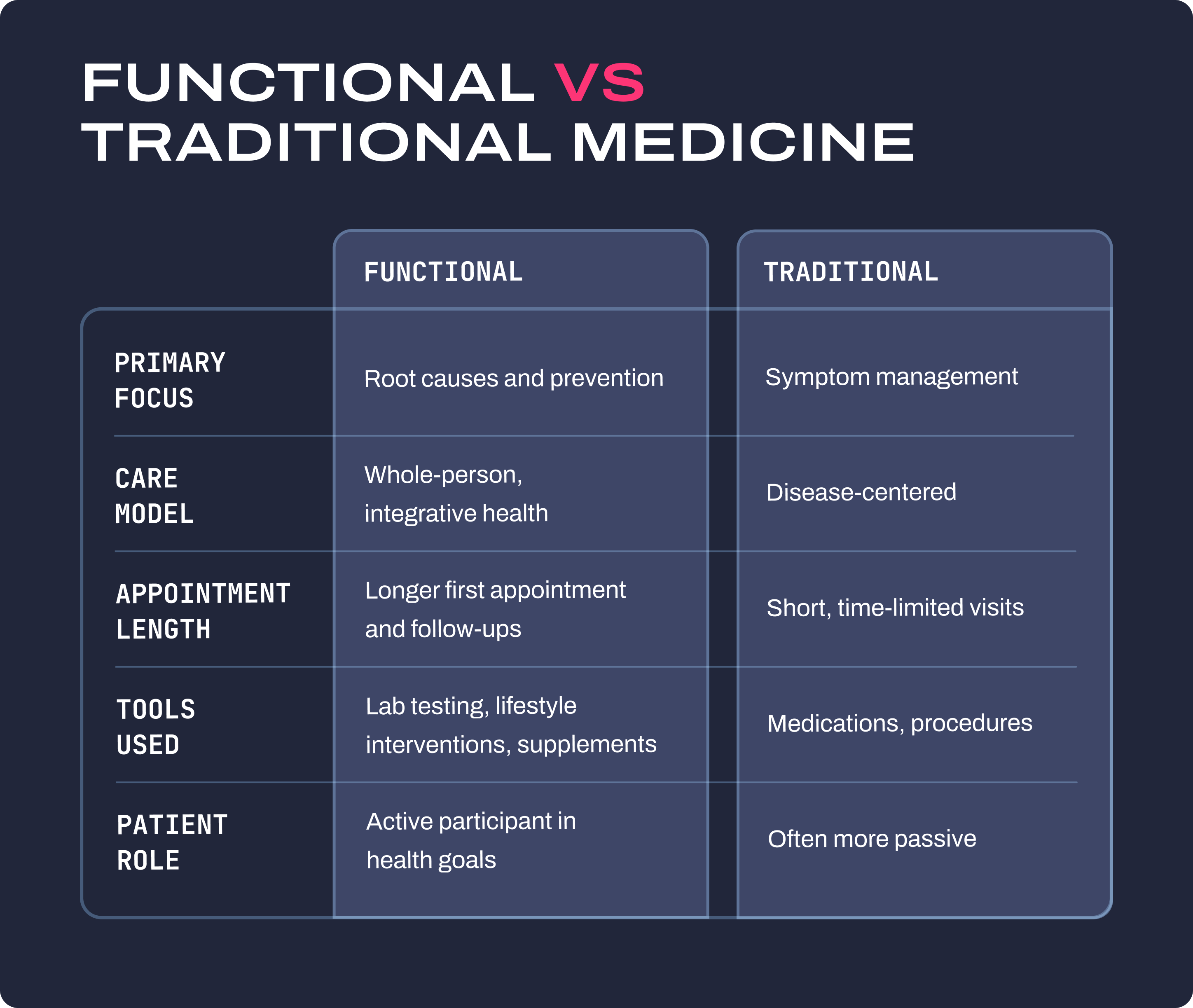
Both models play an important role in medical care. Conventional medicine excels in acute care, diagnostics, and emergency situations, while functional medicine is often sought for chronic conditions that benefit from a deeper, systems-based lifestyle approach. Leading institutions like the Cleveland Clinic now include functional medicine programs within traditional healthcare settings, giving patients the best of both worlds.2
Conditions Commonly Addressed by Functional Medicine Providers
Functional medicine is commonly used to support people managing chronic or complex health issues, including:
- Digestive concerns such as IBS, bloating, or food sensitivities
- Hormonal imbalances, including thyroid and adrenal dysfunction
- Autoimmune conditions
- Chronic fatigue and sleep disturbances
- Chronic pain and inflammation
- Nutrient deficiencies and absorption issues
- Women’s health concerns across the lifespan
Rather than offering a single intervention, functional medicine practitioners layer multiple strategies to support long-term well-being.
Benefits of Working With a Functional Medical Provider

Patients often seek functional medicine after feeling frustrated by fragmented care. Benefits may include:
- A more personalized and holistic approach to treatment
- Focus on prevention and long-term health optimization
- Emphasis on lifestyle interventions
- Support for sustainable behavior change
Many functional medicine providers offer both in-person and virtual visits, making care accessible for new patients regardless of location.
How to Find a Functional Medical Provider
When choosing a functional medicine provider, consider the following:
- Credentials: Look for MDs, DOs, or NPs with training through the Institute for Functional Medicine (IFM).
- Scope of care: Ask about experience with your specific health concern
- Testing and follow-up: Inquire about diagnostic testing, treatment timelines, and pricing structure (some functional medicine providers don’t take traditional insurance).
- Care philosophy: A good provider will emphasize collaboration and education and empower you to reach your health goals.
How Signos Supports Functional Medicine Care
.png)
Functional medicine centers on personalized, data-driven lifestyle changes, and Signos fits naturally within this approach. By continuously tracking glucose, Signos helps individuals see how daily factors like nutrition, sleep, movement, and stress influence their metabolic health in real time.
With ongoing tracking and Weekly Insights, members can uncover meaningful patterns and bring clearer, more actionable information into conversations with their healthcare provider. When patients understand how their own behaviors affect their bodies, care becomes more collaborative, more targeted, and ultimately more effective.
The Bottom Line
A functional medical provider offers an integrative approach to healthcare that focuses on root causes rather than just symptom relief. By combining evidence-based medicine, personalized lab testing, and lifestyle interventions, functional medicine can support long-term well-being. Tools like Signos can be a great addition to this model by turning everyday health data into actionable insight.
Learn More With Signos’ Expert Advice
Signos combines cutting-edge research with the proven benefits of continuous glucose monitoring to help you achieve your health goals. Check out more articles on the Signos blog.
Topics discussed in this article:
References
- Bland J, Jones DS. Functional medicine: a systems approach to chronic disease management. Integr Med (Encinitas). 2018;17(2):38-45.
- Cleveland Clinic. Functional medicine overview. Accessed 2024. https://my.clevelandclinic.org/departments/functional-medicine/about

.svg)










.svg)
.svg)
.svg)
.svg)
.svg)
.svg)
.svg)
