

.jpg)
If you’re considering taking Wegovy or your doctor has already prescribed it, understanding how and when to use the medication is an important first step. Wegovy dosing follows a structured schedule that changes over time, which can feel confusing at first—especially if you’re used to medications that start and stay at the same dose. This gradual progression is intentional and designed to help the body adjust while reducing the risk of side effects.
Because dose changes occur in stages, many people have questions about what each phase means, how long it lasts, and when to expect adjustments. A clear understanding of the Wegovy dose chart can help set realistic expectations and reduce uncertainty as treatment begins. In this article, we break down the Wegovy dosing schedule step by step, including the starting dose, dose increases, and maintenance phase, so you can feel informed and prepared as you move through treatment.
What Is Wegovy and How Does Dosing Work?
.jpg)
Wegovy is a once-weekly injectable medication approved by the FDA for long-term weight management. It contains semaglutide, a Glucagon-Like Peptide-1 (GLP-1) receptor agonist that mimics a naturally occurring hormone involved in appetite regulation.1
Wegovy is one of several medications in the GLP-1 receptor agonist class, a group that also includes treatments approved for type 2 diabetes and, more recently, weight management. While these medications share a similar mechanism of action, they differ in their approved indications, dosing schedules, and target doses. As a result, dosing frameworks are specific to each medication and are not interchangeable.
Wegovy is prescribed for adults who meet specific clinical criteria. It is FDA-approved for individuals with a body mass index (BMI) of 30 or higher, or a BMI of 27 or higher when at least one weight-related health condition, such as high blood pressure, type 2 diabetes, or high cholesterol, is present.2 Eligibility is determined by a healthcare provider based on overall health history and established clinical guidelines.
When you start a GLP-1 medication, you may experience unpleasant gastrointestinal side effects, such as nausea, vomiting, and diarrhea. Starting at a low dose and gradually increasing to a therapeutic dose over time, typically every 4 weeks, helps mitigate these side effects. The manufacturer of Wegovy (Novo Nordisk) has established the recommended dosing schedule. Your prescribing medical provider adheres to this titration schedule, adjusting as needed based on your tolerance and outcomes.
Wegovy Starting Dose: What to Know
.jpg)
Because Wegovy is prescribed for weight loss, many people expect to start at a dose that produces noticeable effects right away. You may be surprised by how low the Wegovy starting dose is, and you might feel uncertain about whether treatment will be effective or if it is progressing as expected. Side effects may also be a concern.
The starting dose is intentionally low to improve tolerability and reduce the risk of side effects that could interfere with continued use. The most common Wegovy starting dose is 0.25 mg per week. This is the manufacturer-recommended starting dose. Your medical provider may adjust your initial dose based on your medical history and sensitivity to prescription medications.
Beyond the standard dosing schedule, researchers have examined whether different titration strategies improve side effects and treatment continuation. In one randomized trial, researchers evaluated a more flexible titration approach in which participants started semaglutide at a substantially lower dose (0.0675 mg per week) than the standard schedule and increased it in smaller, weekly increments. The study found that this slower escalation was associated with fewer gastrointestinal side effects and lower rates of treatment discontinuation than the standard starting dose.3
Whether your doctor starts you on the manufacturer-recommended starting dose or a lower one, this modest dose plays an important role in the progression of your Wegovy treatment. Gradual dose increases are a planned part of the process, designed to build on this initial phase as treatment continues.
Why Wegovy Doses Increase Gradually
.jpg)
Wegovy acts by slowing gastric emptying (the natural digestive process where food and liquids move from the stomach into the small intestine for further breakdown and absorption) and decreasing appetite. Starting at or jumping immediately to a high dose can overwhelm the digestive system, causing severe adverse reactions that may cause the user to stop treatment before they can achieve the intended results.
Some common side effects include:
- Nausea
- Diarrhea
- Vomiting
- Constipation
- Stomach (abdomen) pain
- Headache
- Tiredness (fatigue)
- Upset stomach
- Dizziness
- Feeling bloated
- Belching
- Low blood sugar in people with type 2 diabetes
- Gas
- Stomach flu
- Heartburn
- Runny nose or sore throat
Gradual increases help reduce the severity of these common, dose-dependent side effects such as nausea, vomiting, diarrhea, constipation, and abdominal pain. Starting at 0.25 mg allows the body to adjust to the medication over 16 weeks, with dose increases typically occurring every four weeks. While lower doses initiate acclimation to the medication, a gradual increase to the 1.7 mg or 2.4 mg maintenance dose is required to achieve optimal appetite suppression and maximal weight-loss benefits.1,4
Overall, the gradual increase in doses of Wegovy is designed to make the medication more tolerable early on while allowing people to reach doses associated with effective appetite suppression over time. This staged approach helps reduce side effects that could otherwise limit continued treatment.
Wegovy Dose Chart: Typical Weekly Progression
Wegovy dosing follows a structured weekly progression, which can be difficult to follow without a clear reference. Lack of clarity about the dosing timeline can make it harder to know what to expect, sometimes leading to unnecessary worry or frustration as doses change.
A Wegovy dose chart provides a clear visual overview of how dosing typically progresses over time. Seeing the full schedule at a glance can clarify when dose changes typically occur and how the medication transitions from the starting phase to maintenance.
The manufacturer-recommended dosing schedule increases the dose every 4 weeks. Under this standard schedule, Wegovy is introduced at a lower dose and gradually escalated before reaching the maintenance phase:
- Weeks 1-4: 0.25 mg
- Weeks 5-8: 0.5 mg
- Weeks 9-12: 1.0 mg
- Weeks 13-16: 1.7 mg
- Weeks 17 and beyond: 2.4 mg
Although the schedule follows a standard structure, the rate of dose escalation may vary based on individual tolerance. Some individuals remain at a given dose if side effects occur, whereas others progress through the schedule as outlined. Viewing the dose chart as a framework rather than a rigid timeline can help contextualize these differences. As always, follow your medical provider's instructions.
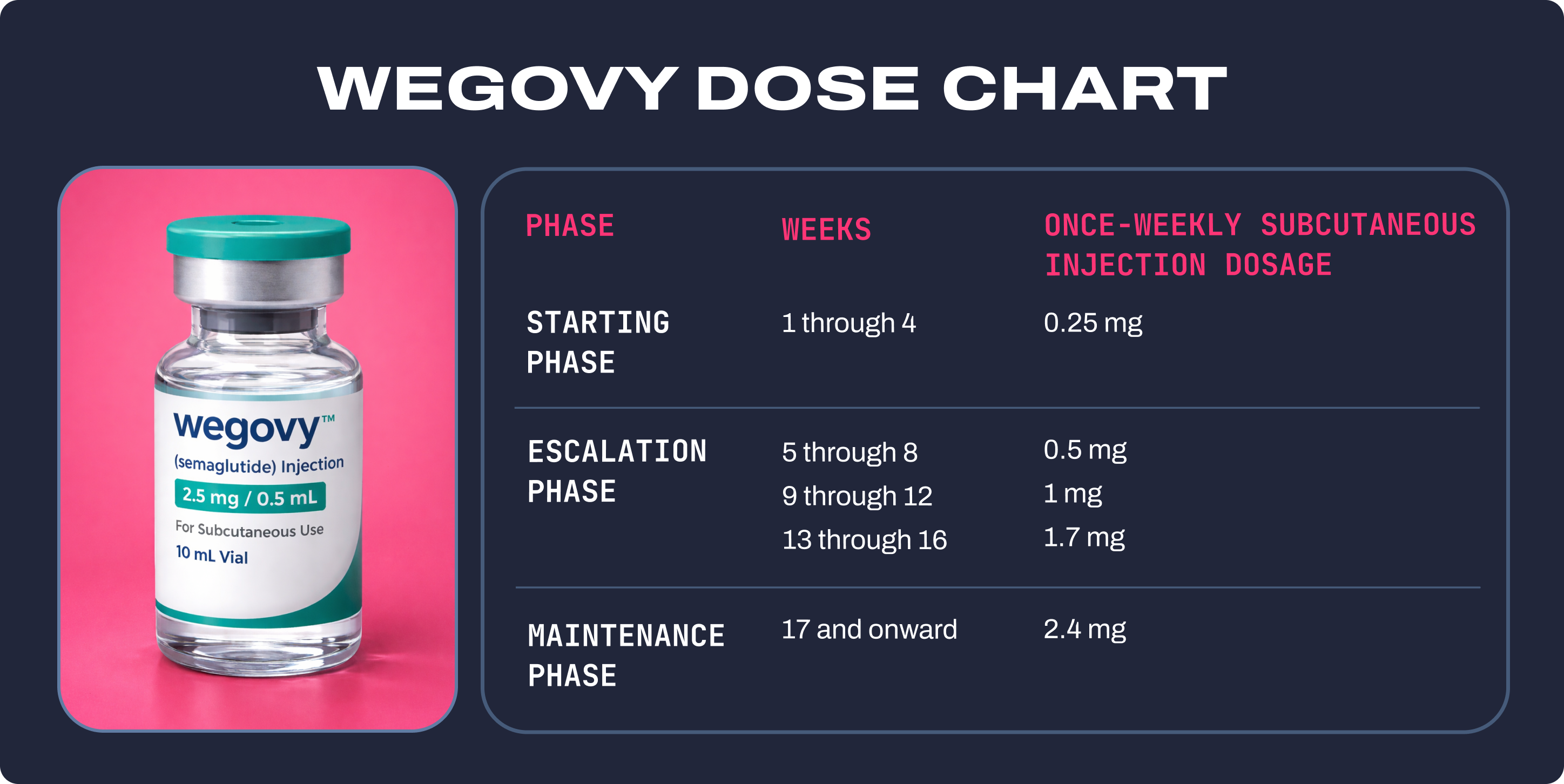
This chart reflects the dosing framework described in the prescribing information and is intended as a general reference. Individual treatments may vary, and not everyone progresses through doses at the same pace.
Because dose changes occur at set intervals, some people find it helpful to have a way to note when changes are expected (such as a calendar or reminders app), particularly during the early stages of treatment. Reviewing the full progression can make dose adjustments feel more predictable as treatment continues.
Always follow the Wegovy dose schedule recommended by your medical provider. If you have questions or are unsure about when or by how much to increase your dose, consult the healthcare professional who prescribed the medication.
Wegovy Maintenance Dose and Long-Term Use
.jpg)
Wegovy is sometimes viewed as a temporary intervention rather than a long-term tool for managing appetite and weight management. However, Wegovy is FDA-approved for long-term weight management, meaning the effects on appetite, weight loss, and other markers of metabolic health aren’t permanent.
When treatment is stopped, appetite often increases, which can contribute to increased hunger and weight regain over time. In the STEP 4 trial, a randomized trial that examined weight and appetite outcomes in adults who either continued or discontinued semaglutide after reaching the maintenance dose, participants who discontinued semaglutide after reaching the maintenance dose regained weight, while those who continued treatment maintained or achieved additional weight loss.4
These findings suggest that ongoing use of semaglutide at a maintenance dose, alongside nutrition, physical activity, and other health-supportive behaviors, helps sustain the medication’s appetite-regulating effects and supports longer-term weight management. Maintenance doses can vary, with 1.7mg and 2.4 mg being the most commonly-recommended Wegovy maintenance doses. The specific maintenance dose chosen depends on individual tolerance and the body's response to the medication.
Long-term use of Wegovy is considered safe for most people, as obesity is a chronic condition, but it requires ongoing medical supervision due to rare but potential risks like gallbladder issues, pancreatitis, and kidney problems, often linked to dehydration from gastrointestinal side effects.5
Wegovy Doses for Weight Loss: What Studies Show
.jpg)
Clinical trials examining Wegovy’s weight-loss effects primarily report results after the escalation period, when subjects are at the highest recommended or maintenance dose. This can leave some people feeling unsure about whether to expect weight loss while still increasing to the full therapeutic dose, and how rapidly they should be losing weight.
In the STEP clinical trial, weight-loss outcomes were consistently greater after participants reached and remained on the maintenance dose of semaglutide. In STEP 1, adults without diabetes lost an average of nearly 15% of their body weight over 68 weeks at the 2.4 mg dose, compared with minimal weight loss in the placebo group.6 Similar patterns were observed across other STEP trials, including studies lasting up to two years, with sustained weight loss reported while participants remained on treatment.1,4
These findings suggest that weight loss with Wegovy is most clearly demonstrated at higher, maintenance-level doses reached through gradual titration. The Wegovy dose schedule (a gradual increase from the starting dose to the maintenance dose) is a necessary component of treatment because it allows the body time to adjust to the medication and minimizes adverse gastrointestinal side effects. While you may be tempted to jump to a higher dose to kickstart your weight loss, it’s very important that you follow the dosing schedule recommended by your prescribing provider. Weight loss can and often does occur during the escalation period as the dose is increased to the maintenance level.
Frequently Asked Questions (FAQs)
1. What is the Wegovy starting dose?
The most common Wegovy starting dose is 0.25 mg once weekly. This initial dose is designed to support tolerability as the body begins adjusting to semaglutide and is not intended to produce full weight-loss effects.
2. What is the Wegovy dose schedule?
Wegovy follows a gradual dose-escalation schedule, typically increasing every four weeks. The standard schedule progresses from a low starting dose through several intermediate doses before reaching a maintenance dose, allowing time for adjustment at each stage.
3. How often does the Wegovy dose increase?
According to the manufacturer's recommended schedule, the Wegovy dose is usually increased every 4 weeks. This timing is built into the dosing recommendations to help reduce side effects and support continued use as treatment progresses.
4. What is the Wegovy maintenance dose?
The most commonly recommended Wegovy maintenance dose is 2.4 mg once weekly, though 1.7 mg once weekly may be used for some individuals based on tolerability. The specific maintenance dose is determined by a healthcare provider.
The Bottom Line
Wegovy dosing is designed to progress gradually, with planned dose increases that balance tolerability and effectiveness over time. Early doses focus on helping the body adjust, while higher, maintenance-level doses are where clinical trials show the most consistent weight-loss outcomes. Understanding Wegovy dosing can help set realistic expectations and reduce confusion or anxiety as treatment unfolds.
A visual Wegovy dose chart can facilitate dosing changes. While individual experiences vary, research consistently shows that remaining on treatment at a maintenance dose is important for sustaining appetite regulation and long-term weight management.
Tracking how your body responds during each phase can provide additional context as doses change. Continuous glucose monitoring (CGM) may help you better understand patterns related to appetite, meals, and metabolic health throughout treatment. Explore how glucose data can complement your Wegovy journey and learn more with Signos’ expert guidance.
Topics discussed in this article:
References
- Chao AM, Tronieri JS, Amaro A, Wadden TA. Semaglutide for the treatment of obesity. Trends Cardiovasc Med. 2023;33(3):159-166. doi:10.1016/j.tcm.2021.12.008
- Shi I, Khan SS, Yeh RW, Ho JE, Dahabreh IJ, Kazi DS. Semaglutide Eligibility Across All Current Indications for US Adults. JAMA Cardiol. 2025;10(1):96-98. doi:10.1001/jamacardio.2024.4657
- Eldor R, Avraham N, Rosenberg O, et al. Gradual Titration of Semaglutide Results in Better Treatment Adherence and Fewer Adverse Events: A Randomized Controlled Open-Label Pilot Study Examining a 16-Week Flexible Titration Regimen Versus Label-Recommended 8-Week Semaglutide Titration Regimen. Diabetes Care. 2025;48(9):1607-1611. doi:10.2337/dc25-0690
- Rubino DM, Abrahamsson N, Davies M, et al. Weight Loss Maintenance With Once-Weekly Semaglutide 2.4 MG in Adults With Overweight or Obesity Reaching Maintenance Dose (STEP 4). J Endocr Soc. 2021;5(Suppl 1):A63-A64. Published 2021 May 3. doi:10.1210/jendso/bvab048.129
- Ryan DH, Lingvay I, Deanfield J, et al. Long-term weight loss effects of semaglutide in obesity without diabetes in the SELECT trial. Nat Med. 2024;30(7):2049-2057. doi:10.1038/s41591-024-02996-7
- Wilding JPH, Batterham RL, Calanna S, et al. Once-Weekly Semaglutide in Adults with Overweight or Obesity. N Engl J Med. 2021;384(11):989-1002. doi:10.1056/NEJMoa2032183

.svg)










.svg)
.svg)
.svg)
.svg)
.svg)
.svg)
.svg)
