


Key Takeaways
- Caffeine affects people differently, and factors like stress, genetics, timing, and add-ins all influence how your blood sugar responds.
- Some drinks (especially sweetened coffees, energy drinks, and sodas) can raise glucose more from their ingredients than from the caffeine itself.
- Drink coffee alongside food or choose options lower in caffeine, such as matcha or green tea, to enjoy caffeine while keeping your blood glucose stable.
that {{mid-cta}}
For many people, caffeine is a daily staple. It sharpens focus and lifts energy, but it can also influence how your body handles glucose. Some notice a quick rise in their blood sugar after coffee or an energy drink, while others don't see much change at all.
A mix of factors, such as stress, genetics, timing, and what you add to your drink, shapes your individual response. Understanding these patterns can make your caffeine routine feel smoother and help you stay ahead of mid-morning dips.
How Caffeine Affects the Body

Caffeine is a central nervous system stimulant that works mainly by blocking adenosine receptors in the brain, a signal that normally promotes relaxation and sleepiness.1 This is why a cup (or a few cups) of coffee can make you feel more awake, focused, and ready to work. As adenosine is blocked, other neurotransmitters and stress hormones become more active, which can sharpen alertness but also push your body into a mild "fight-or-flight" state.
That stimulant effect doesn't stop at the brain. Caffeine can increase the release of adrenaline and other stress hormones, which may temporarily raise heart rate and blood pressure, especially in people who don't use it regularly.2 Caffeine can cause a short-lived bump in blood pressure for some people, but drinking coffee regularly doesn't appear to raise the long-term risk of hypertension.2,3 Most experts consider up to about 400 milligrams of caffeine per day (roughly three to four cups of brewed coffee) a reasonable limit for healthy adults.1
Caffeine also interacts with glucose metabolism. Acute caffeine intake can reduce insulin sensitivity for a few hours, meaning your cells may not respond to insulin as efficiently right after you consume it.4,5 In controlled trials, this has been linked to higher post-meal blood glucose levels in some people, even when insulin levels themselves don't change much.4 Over the long term, though, studies on regular coffee consumption and insulin resistance show mixed results, suggesting that factors like total diet quality, genetics, and tolerance all help determine how caffeine affects your blood sugar day to day.5
Caffeine can also shape your eating patterns in less direct ways. When it increases alertness or elevates stress hormones, it may subtly shift your sense of hunger or fullness. A few studies have found that drinking coffee around mealtimes can dampen appetite. Still, the results are inconsistent, and much depends on what's actually in the cup, from added sugar or creamer to sweeteners, as well as your own sensitivity.6
Caffeine's Impact on Blood Sugar and Insulin Sensitivity

Caffeine can affect how your body manages glucose for a short time. Several clinical trials have shown that when people consume caffeine, they temporarily become less insulin-sensitive, which can lead to higher glucose levels after a meal than they normally would.4,5 This change is brief, but for some, it's enough to create a noticeable rise in post-meal blood sugar.
These effects don't always match what we see in long-term research. Studies examining regular coffee intake often show mixed or even positive associations with glucose metabolism, including a lower risk of type 2 diabetes among habitual coffee drinkers.5 That contrast suggests your body may adapt over time, and that compounds in coffee beyond caffeine, such as antioxidants, may influence its metabolic impact.
Because individual responses vary, the same drink can look completely different from one person's glucose curve to the next. Stress levels, sleep, genetics, and whether you drink coffee on an empty stomach or with food all play a role in how your blood sugar responds in the moment.
Why Some People Spike From Caffeine (and Others Don't)

People respond to caffeine differently, and several factors shape whether you see a rise in glucose:
- Genetics: Some people metabolize caffeine quickly, while slower metabolizers may feel its effects longer, including a stronger stress hormone response.
- Stress levels: High cortisol, whether from poor sleep, a tough workout, or a hectic morning, can make a post-coffee bump more pronounced.
- Timing: Coffee on an empty stomach is more likely to trigger a rise than coffee paired with protein or fiber.
- What you add: Sugar, flavored syrups, creamers, and certain plant milks can raise blood sugar on their own, sometimes more than caffeine does.
- Your habits: Someone who drinks coffee every day may react differently from someone who has it only once in a while.
Because of these nuances, two people can order the same drink and still see very different glucose responses.
Caffeine Types and Their Glucose Effects

Not all caffeinated beverages are created equal, and the way they affect blood sugar depends on both the caffeine and other ingredients.
Coffee
A basic cup of brewed coffee or a shot of espresso is usually pretty simple from a glucose standpoint. Caffeine may cause a slight rise in blood sugar, but the drink itself has almost no carbohydrates. Once you start adding sugar, flavored syrups, or heavy creamers, blood glucose can look very different.
Energy Drinks
Energy drinks typically contain caffeine alongside a substantial amount of sugar or other sweeteners. Sugar alone can raise blood glucose, and caffeine may add another layer of effect for those who are more sensitive.
Tea (Black, Green, or Matcha)
Tea generally comes with less caffeine than coffee. Matcha also adds L-theanine, which can make the energy feel smoother. Unsweetened tea is naturally low in carbohydrates, so most of the glucose impact comes from whatever you add to it.
Soft Drinks and Colas
Caffeinated sodas are often high in added sugars, which can cause a sharp spike in blood sugar. Diet versions skip the sugar, but you might still notice a response depending on how you react to artificial sweeteners.
5 Tips to Reduce Glucose Spikes from Caffeine
A few small adjustments can make your caffeine routine feel a lot steadier:
- Have it with food. Coffee on an empty stomach tends to hit harder, so pairing it with protein or fiber can help keep your glucose from spiking.
- Go lighter on the add-ins. Choosing unsweetened or low-sugar options can prevent the spike that comes from flavored creamers or sweet syrups, and not necessarily the caffeine.
- Try a milder source of caffeine. Matcha or green tea often provides a smoother energy boost for people who are sensitive to stronger brews.
- Cut back if needed. If you're feeling jittery or noticing more glucose swings, reducing your caffeine intake may help.
- Adjust the timing. Some people do better waiting until mid-morning, especially if the early part of the day tends to be stressful or rushed.
These simple tweaks can make caffeine more blood sugar-friendly without giving it up altogether.
Signos Insights: Understanding Your Personal Caffeine Response
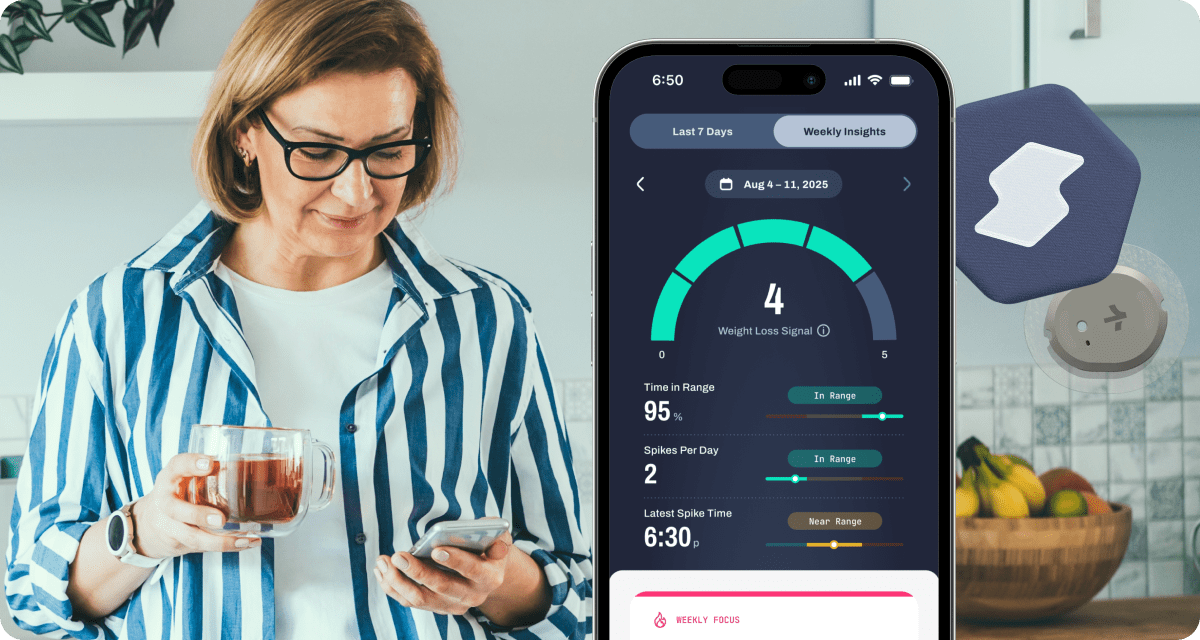
Caffeine can affect everyone differently, and if your glucose feels unpredictable, it may be playing a bigger role than you realize. Signos helps you understand how caffeine fits into your daily routine by turning each cup into a data-backed insight.
Real-time CGM visibility shows how different caffeinated drinks impact your glucose, making it easier to identify which options keep you steady and which tend to push your numbers higher. You may notice that some drinks lead to a smooth, stable curve, while others trigger subtle spikes or increased variability.
Context logging adds important detail to the picture. By noting what you drank, how much, and when, you can uncover patterns that aren’t obvious in the moment, such as differences between your first cup of the day and an afternoon pick-me-up.
Experiments to try
- Coffee with food vs. coffee on its own: See whether pairing caffeine with a meal softens glucose swings compared to drinking it on an empty stomach.
- Black coffee vs. coffee with creamer: Understand how added fats or sugars influence your post-coffee glucose response.
- Coffee vs. matcha vs. green tea: Compare how different caffeine sources affect both glucose stability and sustained energy.
- Half-caff vs. full-caff: Test whether a lower caffeine dose keeps your glucose steadier without sacrificing alertness.
- Energy drink vs. homemade, low-sugar electrolyte mix: Identify whether packaged energy drinks trigger sharper spikes than simpler, lower-sugar alternatives.
Over time, the Signos Weekly Insights report pulls these experiments together, helping you spot trends, like consistently higher spikes after early-morning coffee or greater sensitivity on high-stress days.
You can also use glucose variability (GV) tracking to see whether caffeine contributes to mid-morning swings or a more up-and-down pattern throughout the day, even if your average glucose looks fine.
Together, these tools help you understand your personal caffeine response so you can fine-tune your routine in a way that supports steadier energy, better focus, and healthier metabolic patterns.
Learn More With Signos' Expert Advice
If you want to understand better how your daily habits shape your health, Signos offers tools and guidance to help you tune into your body's patterns. Explore how Signos can improve overall health, and dive deeper into glucose insights on the Signos blog to learn more about energy, metabolism, and healthy choices to support your well-being.
Topics discussed in this article:
References
- Evans J, Richards JR, Battisti AS. Caffeine. [Updated 2024 May 29]. In: StatPearls [Internet]. Treasure Island (FL): StatPearls Publishing; 2025 Jan-. Available from: https://www.ncbi.nlm.nih.gov/books/NBK519490/
- Abbas-Hashemi SA, Hosseininasab D, Rastgoo S, Shiraseb F, Asbaghi O. The effects of caffeine supplementation on blood pressure in adults: A systematic review and dose-response meta-analysis. Clin Nutr ESPEN. 2023;58:165-177. doi:10.1016/j.clnesp.2023.09.923
- Haghighatdoost F, Hajihashemi P, de Sousa Romeiro AM, et al. Coffee Consumption and Risk of Hypertension in Adults: Systematic Review and Meta-Analysis. Nutrients. 2023;15(13):3060. Published 2023 Jul 7. doi:10.3390/nu15133060
- Emami MR, Khorshidi M, Zarezadeh M, Safabakhsh M, Rezagholizadeh F, Alizadeh S. Acute effects of caffeine ingestion on glycemic indices: A systematic review and meta-analysis of clinical trials. Complement Ther Med. 2019;44:282-290. doi:10.1016/j.ctim.2019.05.003
- Choi S, Park T, Je Y. Association Between Coffee Consumption and Glucose Metabolism Markers in Korean Adults. Nutrients. 2025;17(9):1484. Published 2025 Apr 28. doi:10.3390/nu17091484
- Correa M, SanMiguel N, López-Cruz L, Carratalá-Ros C, Olivares-García R, Salamone JD. Caffeine Modulates Food Intake Depending on the Context That Gives Access to Food: Comparison With Dopamine Depletion. Front Psychiatry. 2018;9:411. Published 2018 Sep 6. doi:10.3389/fpsyt.2018.00411

.svg)







.svg)
.svg)
.svg)
.svg)
.svg)
.svg)
.svg)
