


Key Takeaways
- Smart planning can help reduce elevated glucose levels often caused by stress, irregular meal timing, and oversized carb-heavy options at the airport.
- Packing TSA-approved snacks, building a balanced plate with protein, fiber, and healthy fats from airport eateries, and moving after eating can all help stabilize your blood sugar at the airport.
that {{mid-cta}}
You're rushing through security, your flight boards in 45 minutes, and you haven't eaten since breakfast. The options? A cinnamon roll the size of your head, a wilted Caesar salad swimming in dressing, or an $8 protein bar.
Airport food is designed for speed and convenience, not stable blood sugar. But that doesn't mean you're stuck choosing between a spike and going hungry until you land. It comes down to knowing what to look for and how to build a glucose-stabilizing meal on the go, balancing protein, fiber, and healthy fats.
Whether you're a frequent flyer or travel once a year, this guide breaks down the meals, snacks, and strategies that'll keep your glucose steady before, during, and after your flight.
Why Airports Are Tricky for Blood Sugar

Managing stable glucose levels while traveling feels like an uphill battle, and for good reason. Stress, fatigue, irregular meal times, and endless sugary snacks and refined carbs at every gate all work against you.
The stress and exhaustion of airport travel may affect your glucose levels before you even consider food. When you're rushing through security or anxious about making your connection, your body releases cortisol, a stress hormone that signals your liver to dump extra glucose into your bloodstream for quick energy.1 But when you’re sitting on the plane, not running from danger, that extra glucose raises your blood sugar instead of supplying energy to your cells.
Now, add the 4 a.m. wake-up, skipped breakfast, and a carb-heavy meal at 2 p.m., and you’ve compounded the problem. Research shows that later and irregular meal timing is linked to higher glucose levels, delayed insulin response, and bigger blood sugar swings throughout the day.2
Thankfully, focusing on what you can control, like building a balanced plate, minding your portions, and keeping some consistency to your meal timings, can help you stay ahead of glucose spikes before they happen.
Building a Glucose-Friendly Airport Plate
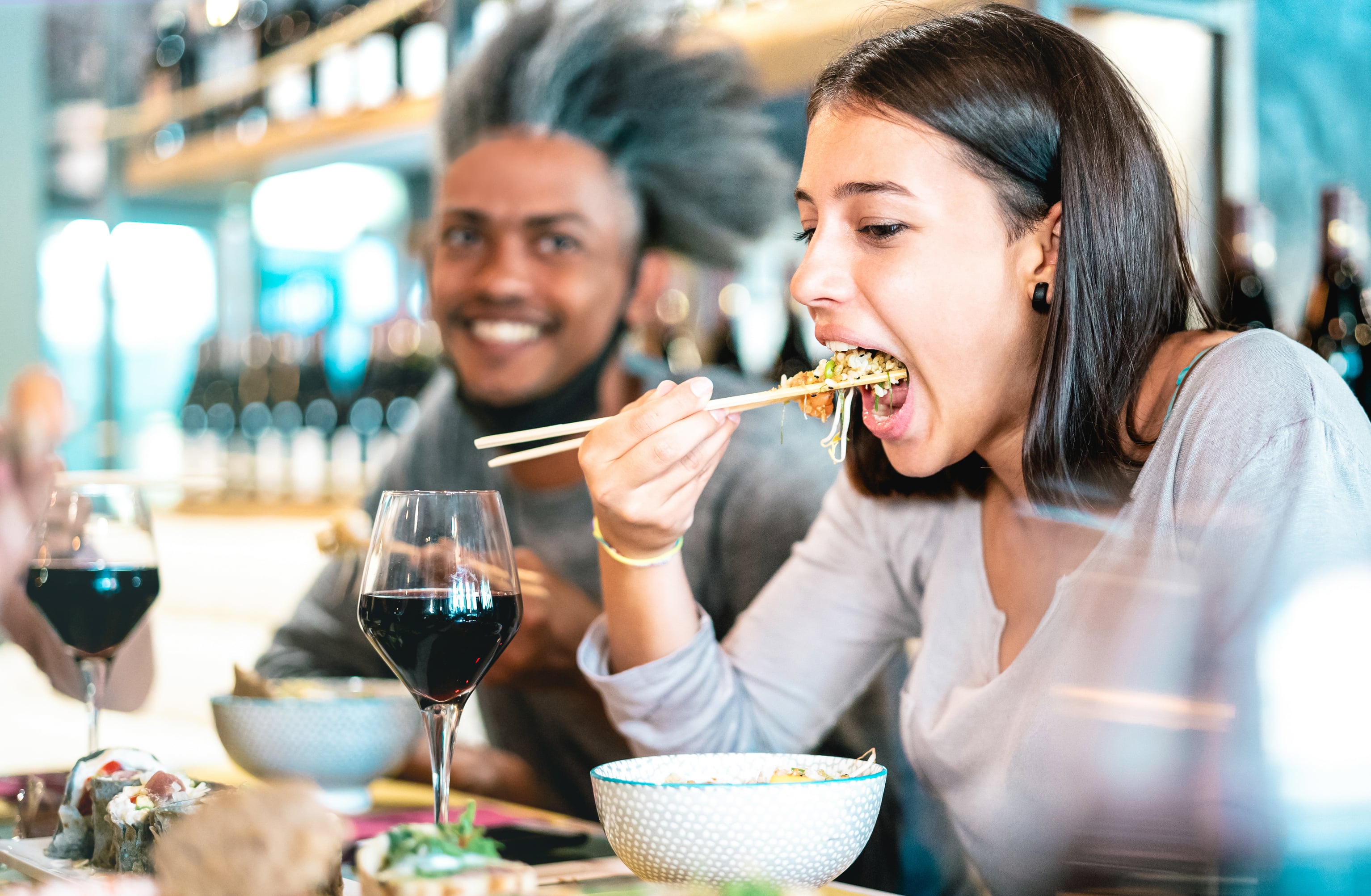
While dining at the airport, prioritize healthy choices that emphasize protein, fiber, and healthy fats, and keep refined carbohydrates and added sugars to a minimum. Focusing on each of these three nutrients will help slow digestion, keep you feeling full, and provide longer-lasting energy by slowing glucose absorption.
- Protein: Lean meats, low-fat dairy, legumes, nuts, and seeds slow down the release of glucose into the bloodstream and help you feel full and satisfied. Choosing protein-rich grains like quinoa instead of white pasta or rice can give a meatless meal a protein boost.
- Fiber: Whole grains, vegetables, fruit, legumes, nuts, and seeds are rich in fiber, which slows down digestion and glucose absorption so you feel full, and your glucose curve is more stable.
- Healthy fats: Nuts, seeds, avocado, olive oil salad dressing, and low-fat dairy support satiety and blunt glucose spikes.
Here’s what this can look like at some of the most common airport spots:
Chick-fil-A
This fast-food option makes it easy to eat healthy while traveling. Grab the grilled nuggets or a grilled chicken sandwich with a side salad instead of the fries. You’ll get plenty of protein and a serving of veggies, plus you'll cut down on carbs without the fries. Skip the soda and grab an unsweetened iced tea or water instead.
Grab-and-Go Boxes
Pre-assembled meal and snack boxes can be a great option, but not all of them are glucose-friendly. While dried fruit, honey, and crackers can all be part of a healthy grab-and-go box, you’ll want to choose one that’s also protein-rich and not just a box of added sugars and carbs. Look for boxes that focus on protein and non-starchy carbs, like hard-boiled eggs, cheese, nuts, and fresh veggies.
Mexican Eats
While eating Mexican food at the airport, take advantage of bowls and salads, which give you more flexibility in the amount of protein, veggies, and carbs you eat. Start with a base of greens, cauliflower rice, or brown rice, then pile on the protein (chicken, steak, or tofu), beans, veggies, and salsa. Then, add a bit of guacamole or cheese for a bit more staying power and satisfaction. If you are getting a burrito, eat half now and save the rest for later, or share one with your travel companion, as the carbs from the tortilla, rice, and beans add up quickly.
Coffee Shops
Most airport coffee shops, including popular chains like Starbucks and Dunkin' Donuts, offer protein boxes, yogurt parfaits, and egg white breakfast sandwiches, which can all be blood-sugar-friendly. Egg bites, an egg sandwich, or a yogurt parfait can all be high-protein, balanced choices.
Just be sure to check the sugar content of any parfaits, as some contain a lot of added sugar between the yogurts, granola, and sweetened fruit, which can lead to an unsuspecting blood sugar spike. And if you're grabbing coffee, a plain coffee, latte, or cappuccino, unsweetened or with a bit of cinnamon or a small drizzle of honey can help wake you up without the blood sugar spike that follows traditional sugary coffee shop drinks.
Quick Meal Hacks for Busy Travelers

You won’t always have time to sit down for a full, healthy airport meal, but with just a little planning and strategy, you can support steady energy and stable blood sugars while you travel.
Pack Your Own TSA-Approved Snacks
TSA does allow you to bring your own solid food through security, but liquids over 3.4 ounces will get tossed, and it’s not just drinks that count as liquids. Hummus, nut butter, and other creamy foods are considered “liquid,” so you’ll want to leave these at home unless you have tiny one-serving containers you can bring them in. And be sure to pack an empty water bottle, as most airports have filling stations, so you can avoid buying an overpriced plastic bottle to stay hydrated.
Foods like jerky, dried chickpeas, trail mix, granola bars, protein bars, fresh fruit, individual packets of protein powder, and nuts can all safely travel in your carry-on. Consider packing a few snacks in case you don’t have time to stop at the airport for one, and to stay fueled during long flights.
Combine Snacks for a Balanced Plate
The benefit of eating at an airport is that you often have a dozen or more food options to choose from. This makes it easy to hit up several places in the food court to build a balanced plate you actually want to eat. Grab a side salad from a fast food counter, add a protein box or hard-boiled eggs from a grab-and-go cooler, and a fresh fruit cup and unsweetened tea from another.
Choose Your Drinks Wisely
You want to stay hydrated while traveling, but not with drinks that send your blood sugar on a roller coaster. Sugar-sweetened beverages are the biggest culprit for blood glucose spikes, as they’re consumed and digested quickly, and often leave you still hungry, ready to eat or drink more.3 To avoid an inevitable blood sugar spike from soda, juice, sweetened coffee drinks, or sweet tea, choose water or sparkling water, unsweetened tea, or coffee instead.
Timing and Portion Tips
One serving of an airport meal or snack could easily be 2 to 3 times the size of what you’d serve yourself at home. Then, tie in stress or boredom as you’re killing time until your flight, and it’s easy to eat more than you need. Even with glucose-friendly choices, too much at once can still spike your levels. If you're eating at a sit-down restaurant, consider ordering an appetizer as your main course, or splitting an entrée if you're traveling with someone.
At grab-and-go spots, check the portion size before you commit, since two smaller items may work better than one oversized meal. If you do end up with a huge portion, eat until you're satisfied and save the rest for later if you can.
After enjoying your balanced meal and stopping when you’re comfortably full, get up and move your body as soon as you’re done eating. Even if you’re short on time, sneaking in a 10- to 15-minute walk after eating can significantly lower your blood glucose peak compared to sitting and waiting at the gate.4
How Signos Helps You Travel Smarter

While these tips offer a strong foundation for managing glucose on travel days, there’s no universal formula for metabolic health, especially when routines get disrupted. What keeps one person steady might cause another to spike. Signos helps close that gap by pairing you with real-time data from a continuous glucose biosensor, so you’re not relying on guesswork when you’re already navigating airport stressors.
With continuous tracking, real-time alerts, and insight reports, Signos shows you exactly how your body responds to an airport meal, a rushed connection, or a long stretch of sitting at the gate.
You can see whether that “balanced” snack actually keeps you in your optimal zone or if a quick walk between terminals is enough to blunt a rising curve. And for frequent travelers, Singos’ Weekly Insights help you learn your patterns both at home and in the air, making it easier to take effective action for steady energy, smoother flights, and a healthier metabolism overall.
The Bottom Line
Eating at the airport doesn't have to lead to a glucose roller coaster or zapped energy levels. By packing TSA-approved snacks, building balanced plates with protein and fiber, moving after meals, and using Signos for real-time feedback, you can keep your energy steady from check-in to landing.
Learn More With Signos’ Expert Advice
Whether you’re traveling or at home, Signos can support your health goals through tracking, expert guidance, and a personalized approach to understanding and maintaining healthy glucose levels.
Topics discussed in this article:
References
- Sharma K, Akre S, Chakole S, Wanjari MB. Stress-Induced Diabetes: A review. Cureus. 2022;14(9):e29142. doi:10.7759/cureus.29142
- Ali M, Reutrakul S, Petersen G, Knutson KL. Associations between Timing and Duration of Eating and Glucose Metabolism: A Nationally Representative Study in the U.S. Nutrients. 2023;15(3):729. doi:10.3390/nu15030729
- Lara-Castor L, O’Hearn M, Cudhea F, et al. Burdens of type 2 diabetes and cardiovascular disease attributable to sugar-sweetened beverages in 184 countries. Nature Medicine. Published online January 6, 2025. doi:10.1038/s41591-024-03345-4
- Hashimoto K, Dora K, Murakami Y, et al. Positive impact of a 10-min walk immediately after glucose intake on postprandial glucose levels. Scientific Reports. 2025;15(1):22662. doi:10.1038/s41598-025-07312-y

.svg)





.webp)
.webp)

.webp)

.svg)
.svg)
.svg)
.svg)
.svg)
.svg)
.svg)
