


Key Takeaways
- Insulin is a hormone made by the pancreas that helps move glucose from the bloodstream into the body’s cells to be used for energy or stored.
- Insulin sensitivity supports stable blood sugar, healthy energy, and long-term metabolic health, while insulin resistance increases the risk of diabetes mellitus, prediabetes, and other chronic health problems.
- Balanced meals, physical activity, sleep, and stress management are all lifestyle factors that help determine how effectively insulin works in the body.
that {{mid-cta}}
Insulin is a hormone that keeps blood glucose levels balanced. It’s produced by the beta cells in the pancreas, located within the islets of Langerhans, and helps regulate how your body uses and stores glucose as energy.
When insulin functions well, blood glucose levels stay within a healthy range, energy levels throughout the day are maintained, and metabolism functions as it should.
Impaired insulin sensitivity (called insulin resistance) means the body’s cells don’t respond well to insulin, resulting in high blood glucose (hyperglycemia). This also increases the risk of different types of diabetes, such as prediabetes or type 2 diabetes.
Understanding what insulin is and how it works can help you make more informed choices about nutrition, movement, and daily habits that support long-term health.
What Insulin Does in Your Body

Insulin helps direct glucose from the blood into the body’s cells to fuel energy needs. Under healthy conditions, the body tightly regulates blood glucose, with insulin acting as a signal to help keep blood sugar within a healthy range. When blood glucose rises after eating carbohydrates, the pancreas releases insulin to help manage the increase and restore equilibrium.1
Insulin also signals the liver and muscles to store excess glucose as glycogen (the form of glucose used for storage). When glycogen stores are full, insulin promotes fat storage to manage excess energy, which helps explain why chronically high insulin levels are sometimes associated with weight gain. In addition, insulin helps regulate protein metabolism and energy balance throughout the day.2
Overall, insulin helps maintain stable blood glucose levels and ensures the body has access to fuel when needed. In type 1 diabetes, the body doesn’t produce insulin at all and requires insulin therapy, sometimes with different types of insulin.
For those with type 2 diabetes, insulin production may be insufficient, insulin action may be impaired, or both, leading to high blood glucose. Persistently elevated glucose levels require ongoing diabetes treatment to avoid complications like kidney disease or damage to the eyes.
Insulin Sensitivity vs. Insulin Resistance

Insulin sensitivity refers to how effectively the body’s cells respond to insulin, allowing glucose to move into the cells for energy. When cells are insulin sensitive, the body doesn’t need to release large amounts of insulin, so levels rise just enough to do their job. As a result, blood sugar and insulin levels remain more stable over time.
Insulin resistance occurs when the body’s cells don’t respond to insulin appropriately. The pancreas releases more and more insulin to keep blood glucose levels stable. Over time, this increased demand can contribute to persistently high blood sugar, prediabetes, and type 2 diabetes, along with potential side effects that affect multiple organ systems.3
Common risk factors for insulin resistance include:
- Physical inactivity
- Hypertension
- Excess body fat
- Genetics
- Chronic stress
- Poor sleep
- Frequent intake of highly processed foods
Insulin resistance is also closely linked to metabolic syndrome, a group of health conditions such as high blood sugar, elevated blood pressure, altered cholesterol levels, and abdominal obesity that together raise the risk of cardiovascular disease.
How Insulin Affects Glucose and Energy

After you eat a carbohydrate-containing meal, blood glucose levels naturally rise. This is a normal response, and when the body responds appropriately with enough insulin, you feel good energetically with fewer sharp spikes.5 Counter-regulatory hormones, such as glucagon, help prevent blood sugar from dropping too low (hypoglycemia) between meals.
When insulin function is impaired, and glucose remains elevated longer than usual or varies more widely throughout the day, it puts the body under greater metabolic stress. These fluctuations in blood sugar are linked to symptoms such as sleepiness and food cravings.
Over time, chronic elevations in insulin and glucose alter insulin's long-term effects on metabolism, favoring fat storage and disrupting normal glucose regulation.
Factors That Support Healthy Insulin Function
Research shows that daily habits can make a big difference in insulin function and blood glucose management:
- Balanced Meals: Protein, fiber, and fat slow glucose absorption, so less insulin is needed after eating. Studies show meals balanced with these macronutrients can improve post-meal glucose and insulin responses.
- Regular Physical Activity: Exercise helps muscles take up glucose more efficiently and improves how the body responds to insulin, both during and after activity. Resistance training, in particular, has been shown to strengthen insulin action in muscle and support better blood glucose control.
- Sleep and Stress Management: Sleep restriction and chronic stress raise cortisol levels, which can impair insulin sensitivity and worsen glucose regulation. Both short sleep duration and poor sleep quality have been linked to insulin resistance.
- Maintaining Lean Muscle Mass: Skeletal muscle is the primary site of insulin-mediated glucose uptake, meaning greater lean muscle mass supports more efficient glucose metabolism and insulin sensitivity.
- Limiting Highly Processed, Sugary Foods: Diets high in refined carbohydrates and added sugars are associated with repeated blood sugar spikes, more insulin demand, and increased risk of insulin resistance.
How Signos Helps You Understand Insulin in Action
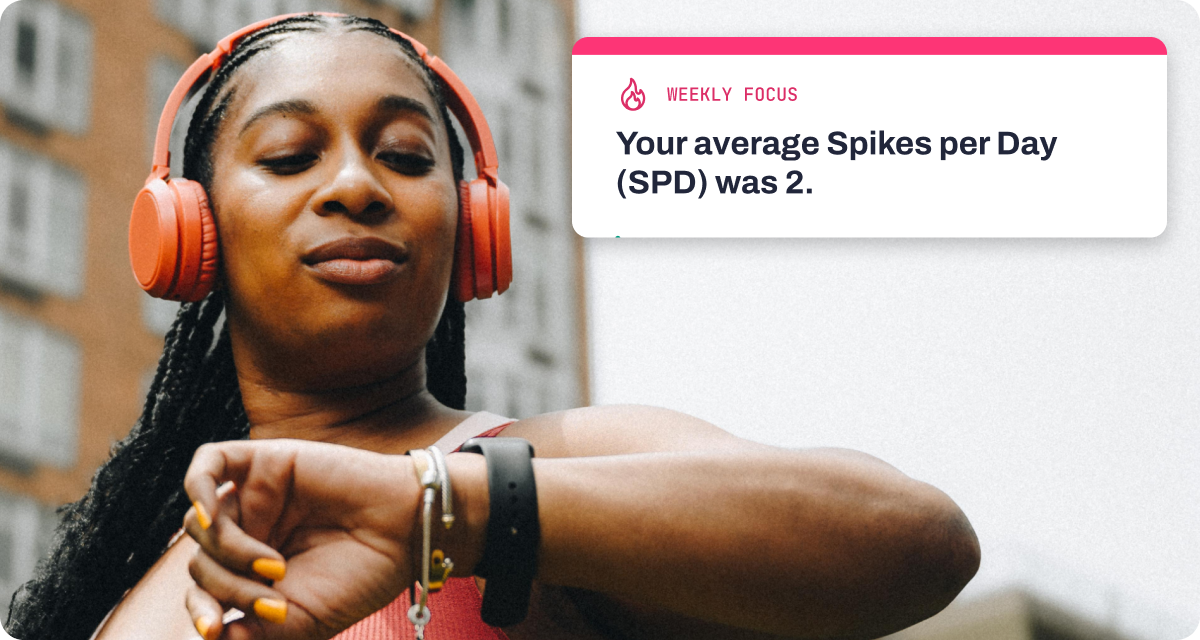
Insulin isn’t something you have to guess about; it leaves a measurable trail. Signos uses continuous glucose monitoring to show how your blood glucose responds to meals, movement, sleep, and daily stress, helping you understand how efficiently your body produces insulin and moves glucose into cells for energy.
Instead of relying on occasional lab results, Signos gives you real-time context. In the app, you can see how different foods spike glucose, how quickly levels return to baseline, and how lifestyle choices influence insulin demand throughout the day. Over time, this reveals how resilient (or strained) your metabolism may be.
With Weekly Insights, Signos surfaces patterns related to energy crashes, hunger, and glucose instability. Features like Latest Spike Time (LST) help pinpoint when glucose spikes most often occur, offering clear opportunities to adjust meals, timing, or activity to support a steadier insulin response.
This ongoing feedback helps turn insulin from an abstract hormone into something you can see, understand, and act on, and it can also support more informed conversations with your healthcare provider about metabolic health.
Signos Features That Help Decode Insulin Response
- 24/7 Glucose Monitoring: See how insulin demand changes across meals, workouts, sleep, and stress.
- Glucose Spike & Recovery Tracking: Understand how quickly your body clears glucose after eating.
- Latest Spike Time (LST): Identify when insulin demand is highest during your day.
- Weekly Insights: Highlights recurring glucose patterns tied to hunger, energy, and food choices.
- Context Logging: Tag meals, activity, sleep, and stress to connect behavior with insulin response.
- Personalized Insights: Get guidance based on your unique glucose patterns, not averages.
Insulin Experiments to Try with Signos
Use your glucose data to test what actually improves insulin efficiency for your body.
- Meal Order Experiment: Eat protein and fiber before carbs and compare post-meal glucose spikes.
- Carb Timing Test: Compare glucose response to carbs earlier in the day versus later at night.
- Meal Composition Swap: Test the same calories with different macro balances and observe spike size and recovery speed.
- Post-Meal Movement: Add a 10–15 minute walk after meals and track changes in glucose clearance.
- Sleep Quality Check: Compare glucose stability after well-rested nights versus poor sleep.
- Snacking vs. Structured Meals: Observe how grazing impacts insulin demand compared to defined meal times.
The result: insulin becomes visible, understandable, and actionable. Signos helps you move beyond generic advice and build habits that support steadier glucose, better energy, and long-term metabolic health.
The Bottom Line
Insulin is essential for regulating blood sugar, energy use, and metabolic health. Supporting insulin sensitivity through nutrition, movement, sleep, and stress management helps reduce the risk of insulin resistance and chronic disease. Personalized feedback tools like Signos can help you better understand your glucose patterns and make daily choices that support healthy insulin function.
Learn More With Signos’ Expert Advice
Improving metabolic health starts with understanding how your body responds to your usual, daily habits. Learn how Signos can improve health or explore more expert insights on glucose metabolism on the Signos blog.
Topics discussed in this article:
References
- De la Cruz-Concepción, B., Flores-Cortez, Y. A., Barragán-Bonilla, M. I., Mendoza-Bello, J. M., & Espinoza-Rojo, M. (2023). Insulin: A connection between pancreatic β cells and the hypothalamus. World journal of diabetes, 14(2), 76–91. https://doi.org/10.4239/wjd.v14.i2.76
- Rahman, M. S., Hossain, K. S., Das, S., Kundu, S., Adegoke, E. O., Rahman, M. A., Hannan, M. A., Uddin, M. J., & Pang, M. G. (2021). Role of Insulin in Health and Disease: An Update. International journal of molecular sciences, 22(12), 6403. https://doi.org/10.3390/ijms22126403
- Freeman AM, Acevedo LA, Pennings N. Insulin Resistance. [Updated 2023 Aug 17]. In: StatPearls [Internet]. Treasure Island (FL): StatPearls Publishing; 2025 Jan-. Available from: https://www.ncbi.nlm.nih.gov/books/NBK507839/
- Krzymien, J., & Ladyzynski, P. (2024). Insulin resistance: Risk factors, diagnostic approaches and mathematical models for clinical practice, epidemiological studies, and beyond. Biocybernetics and Biomedical Engineering, 44(1), 55-67. https://doi.org/10.1016/j.bbe.2023.12.004
- Papakonstantinou, E., Oikonomou, C., Nychas, G., & Dimitriadis, G. D. (2022). Effects of Diet, Lifestyle, Chrononutrition and Alternative Dietary Interventions on Postprandial Glycemia and Insulin Resistance. Nutrients, 14(4), 823. https://doi.org/10.3390/nu14040823
- Blaak, E. E., Antoine, J. M., Benton, D., Björck, I., Bozzetto, L., Brouns, F., Diamant, M., Dye, L., Hulshof, T., Holst, J. J., Lamport, D. J., Laville, M., Lawton, C. L., Meheust, A., Nilson, A., Normand, S., Rivellese, A. A., Theis, S., Torekov, S. S., & Vinoy, S. (2012). Impact of postprandial glycaemia on health and prevention of disease. Obesity reviews : an official journal of the International Association for the Study of Obesity, 13(10), 923–984. https://doi.org/10.1111/j.1467-789X.2012.01011.x
- Meng, H., Matthan, N. R., Ausman, L. M., & Lichtenstein, A. H. (2017). Effect of macronutrients and fiber on postprandial glycemic responses and meal glycemic index and glycemic load value determinations. The American journal of clinical nutrition, 105(4), 842–853. https://doi.org/10.3945/ajcn.116.144162
- Wang, J., Fan, S., & Wang, J. (2025). Resistance training enhances metabolic and muscular health and reduces systemic inflammation in middle-aged and older adults with type 2 diabetes: a meta-analysis. Diabetes research and clinical practice, 229, 112941. https://doi.org/10.1016/j.diabres.2025.112941
- Singh, T., Ahmed, T. H., Mohamed, N., Elhaj, M. S., Mohammed, Z., Paulsingh, C. N., Mohamed, M. B., & Khan, S. (2022). Does Insufficient Sleep Increase the Risk of Developing Insulin Resistance: A Systematic Review. Cureus, 14(3), e23501. https://doi.org/10.7759/cureus.23501
- Merz, K. E., & Thurmond, D. C. (2020). Role of Skeletal Muscle in Insulin Resistance and Glucose Uptake. Comprehensive Physiology, 10(3), 785–809. https://doi.org/10.1002/cphy.c190029
- DiNicolantonio, J. J., & O'Keefe, J. H. (2022). Added Sugars Drive Insulin Resistance, Hyperinsulinemia, Hypertension, Type 2 Diabetes and Coronary Heart Disease. Missouri medicine, 119(6), 519–523.

.svg)


.webp)



.jpg)



.svg)
.svg)
.svg)
.svg)
.svg)
.svg)
.svg)
