


Key Takeaways
- Weight loss plateaus are a normal part of weight loss, often caused by metabolic adaptation, hormonal shifts, exercise efficiency, stress, and poor sleep.
- Small strategic adjustments in nutrition, exercise, and lifestyle habits can restart progress.
- Tracking tools like Signose can provide unique insight into glucose responses and possible sticking points to help you maintain sustainable, healthy weight loss.
that {{mid-cta}}
Weight-loss progress is like a hike. The path isn’t always linear; there are climbs, dips, and long stretches that feel flat. Even with consistent workouts and healthy eating, it’s completely normal for your body to hit a plateau.1
Small daily weight fluctuations are expected as your body works to maintain overall balance.2 Understanding why plateaus happen, and how to adjust strategically, can help you move past them and continue toward your goals.
In this article, we will dive into why plateaus happen, how to fine-tune your nutrition, exercise, and lifestyle habits, and how tools like Signos can help you with glucose tracking and optimize continued, sustainable progress.
Why Weight Loss Plateaus Happen

Weight loss plateaus can happen for various reasons. While it can be frustrating, understanding the science behind plateaus can help you make healthy progress and give yourself grace throughout the journey.
Metabolic Adaptation
As you lose weight (especially with rapid loss or severe calorie deficit), your body slows its metabolism and increases hunger. Your body may feel like it is “fighting” weight loss.1,3
A 2022 study of 65 premenopausal women who were overweight followed a very low-calorie diet until they reached a normal BMI. On average, the women lost 28 pounds (16% of their body weight) over 5 to 6 months. After losing weight, their bodies burned fewer calories at rest than was predicted (a form of metabolic adaptation), which slowed further weight loss and extended the time needed to reach their goal weight.1
A 2023 study of 56 adults with obesity underwent an 8-week low-calorie diet, followed by 4 weeks of refeeding and weight stabilization. By week 9, participants lost 31 pounds (13-15% of their body weight), and their resting metabolic rate dropped significantly, about 350 calories lower than expected.3
Calorie Creep
Less scientific, but over time, your portion sizes, snacking, or cravings can quietly increase calorie intake, making it easier to maintain or regain weight.
Hormonal Shifts
After weight loss, research shows that the body often increases hunger-stimulating hormones (such as ghrelin) and decreases fullness hormones (such as leptin).3
In the 2023 study, those with the largest metabolic slowdown (or adaptation) also experienced bigger increases in ghrelin and reported much higher hunger and appetite. By week 13, metabolic adaptation and ghrelin levels had mostly returned to baseline.³
Exercise Habituation
In short, your body becomes more efficient, burning fewer calories as it gets used to a particular workout.
A large study of 1,754 adults living everyday lives found that, on average, their bodies compensated for about 28% of the calories they burned from physical activity, meaning that only about 72% of the calories burned from exercise translate into extra calories for the day. People whose bodies compensate more may be more likely to gain extra weight.4
Stress and Sleep:
High cortisol or poor sleep can stall progress, as a higher BMI is associated with elevated cortisol levels.5 People with abdominal obesity tend to have elevated cortisol levels, which can lead to increased consumption of fatty and sugary foods. Research suggests that some people are high responders to cortisol and may be more likely to gain weight than low responders.6 Poor sleep is also associated with challenges in controlling appetite and weight gain.7
As you assess your behaviors and potential reasons, consider the following nutrition strategies to help you break a weight-loss plateau.
5 Nutrition Strategies to Break a Plateau

Take a week or two to assess your intake and make nutrition adjustments.
- Track intake carefully. Use reputable apps (like Signos) to track your food and beverage intake, including portion sizes. Make sure to enter little bites and snacks throughout the day. Tracking can give you an accurate picture of your intake and macronutrient balance.
- After assessing your intake, make small calorie adjustments, such as swapping half-and-half for sweetened creamer in your coffee or reducing portion sizes of higher-calorie foods like peanut butter, fats, oils, and chips.
- Prioritize protein and fiber at meals and snacks to maintain satiety and muscle mass during weight loss.
- Adjust macronutrient ratios (e.g., lower carbs, increase protein) to optimize glucose response and assist with continued healthful weight loss.
- Avoid extreme restriction, which can backfire metabolically. The two studies cited earlier showed that restricting calories severely halted weight loss and increased hunger, which could lead to overeating.1,3
Exercise Adjustments for Continued Progress

After assessing your nutritional health, consider exercise strategies to push past a plateau. As mentioned earlier, your body can become accustomed to routine workouts.
- Increase intensity or duration gradually to work your muscles in different ways.
- Incorporate resistance training to build muscle (and also boost metabolism).
- Mix up cardio workouts with interval or circuit training.
- Track workout performance and progression to avoid adaptation.
Switching up your exercise routine can also make it more enjoyable!
Lifestyle Factors That Affect Plateaus

Now that you have addressed nutrition and physical activity, don’t forget to assess lifestyle factors that can impact plateaus.
- Improve sleep quality (7–9 hours). Sleep is critical for your body to perform optimally and sets you up for success with eating and energy for physical activity.
- Find ways to manage stress to reduce cortisol spikes. Consider music, breathwork, or stretching.
- Hydration: Dehydration can impair your ability to exercise effectively and make it harder to complete daily activities, reducing your energy.
- Incorporate NEAT (non-exercise activity thermogenesis) like parking further away at the store and walking, taking the stairs at work, or doing household chores to boost your activity levels.
How Signos Can Help You Break Through a Plateau
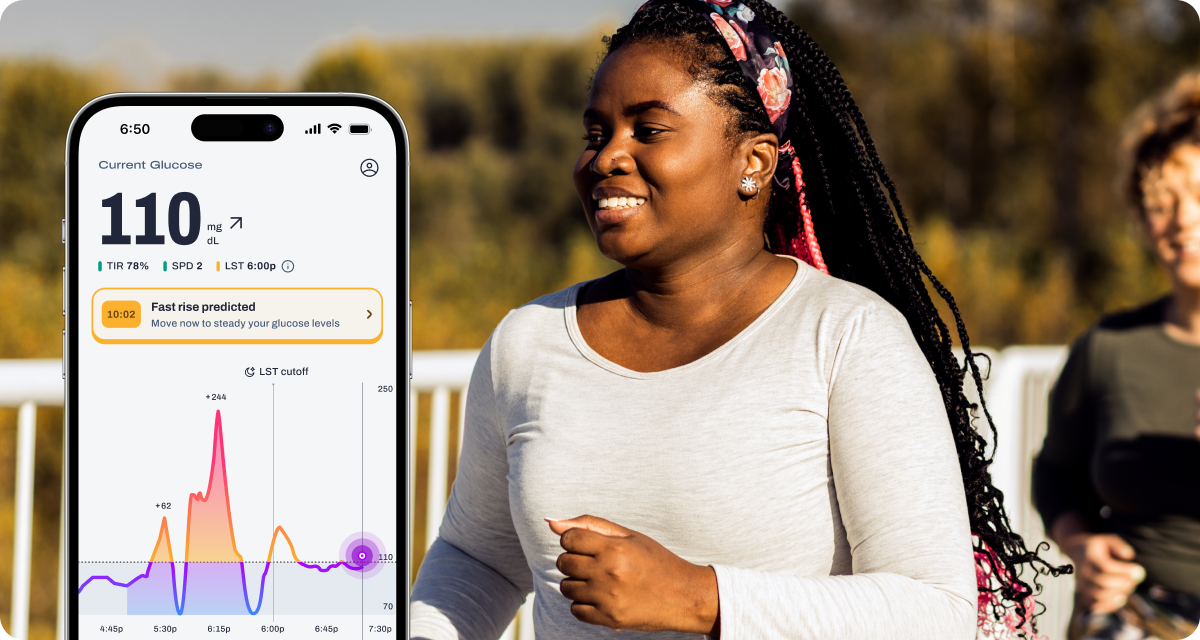
Weight loss plateaus often happen when your body adapts to familiar routines. Signos helps you uncover what’s happening beneath the surface by showing how nutrition, movement, sleep, and stress impact your glucose, and ultimately, fat storage and energy use.
- Glucose Graph: See how specific foods, portion sizes, and meal timing affect your glucose in real time. Patterns like frequent spikes, prolonged elevations, or energy crashes can signal when your body is more likely to store excess glucose as fat rather than burning it.
- Weekly Insights: Signos’ Weekly Insights summarize trends across your meals, activity, and glucose stability. These reports help highlight plateaus caused by subtle factors, like late-night eating, reduced movement intensity, or increased glucose variability, even when calories or workouts haven’t changed.
- Context Logging: Log meals, workouts, sleep, and lifestyle factors to connect behaviors with glucose responses. This added context makes it easier to pinpoint which habits are helping you progress and which ones may be holding you back.
Experiments to Try with Signos
- Carb Timing Around Workouts: Compare glucose responses when eating carbs before vs. after workouts to see which timing supports steadier energy and faster glucose recovery.
- Training Intensity Shifts: Track glucose patterns on days with increased strength training versus higher-intensity cardio to identify which approach improves insulin sensitivity and stability for you.
- Sleep & Recovery Check: Monitor overnight glucose and morning trends after high-quality sleep versus short or disrupted sleep to see how recovery affects cravings, energy, and glucose variability.
- Meal Rhythm Experiment: Test consistent meal and snack timing versus irregular eating to evaluate impacts on glucose swings, hunger, and afternoon energy dips.
By turning plateaus into data-backed experiments, Signos helps you move from guessing to adjusting, so you can make smarter changes and keep progress moving forward.
Mindset and Consistency
Shifting your mindset around long-term weight loss and expectations can help you focus on consistency, not perfection. Plateaus are a normal part of weight management, not a sign of failure.
When you hit a plateau, take time to celebrate non-scale victories: gains in strength, better energy, improved glucose stability, and the healthy habits you’ve maintained even during a stressful season. Remember, small adjustments compound over time, and so do small slips. Your progress is evident, and a plateau is another marker that you’ve made tremendous progress.
The Bottom Line
Plateaus are a natural part of weight loss, often signaling metabolic adaptation. Adjusting nutrition, exercise, lifestyle factors, and your mindset, plus tools like Signos to understand your body’s unique glucose response, you can push past a plateau in a healthy way, preserve lean muscle mass, and continue making sustainable progress toward your weight loss goals.
Learn More With Signos’ Expert Advice
A CGM can uncover sticking points in your eating, exercise, and sleep trends to help you overcome a weight loss plateau and improve your overall health. Learn more about glucose levels and tracking on the Signos blog, written by health and nutrition experts.
Topics discussed in this article:

.svg)





.svg)
.svg)
.svg)
.svg)
.svg)
.svg)
.svg)
