

Key Takeaways
- Elliptical machines effectively combine cardio and resistance to build fitness and burn fat in a low-impact workout environment.
- Correct posture, equal engagement of the upper and lower body, and appropriate intensity levels help prevent injury and ensure you maximize the workout's metabolic benefits.
- The elliptical is one of the more versatile pieces of exercise equipment, allowing for beginner steady-state cardio workouts to advanced HIIT-style sessions, both of which can target fat loss and metabolic health.
that {{mid-cta}}
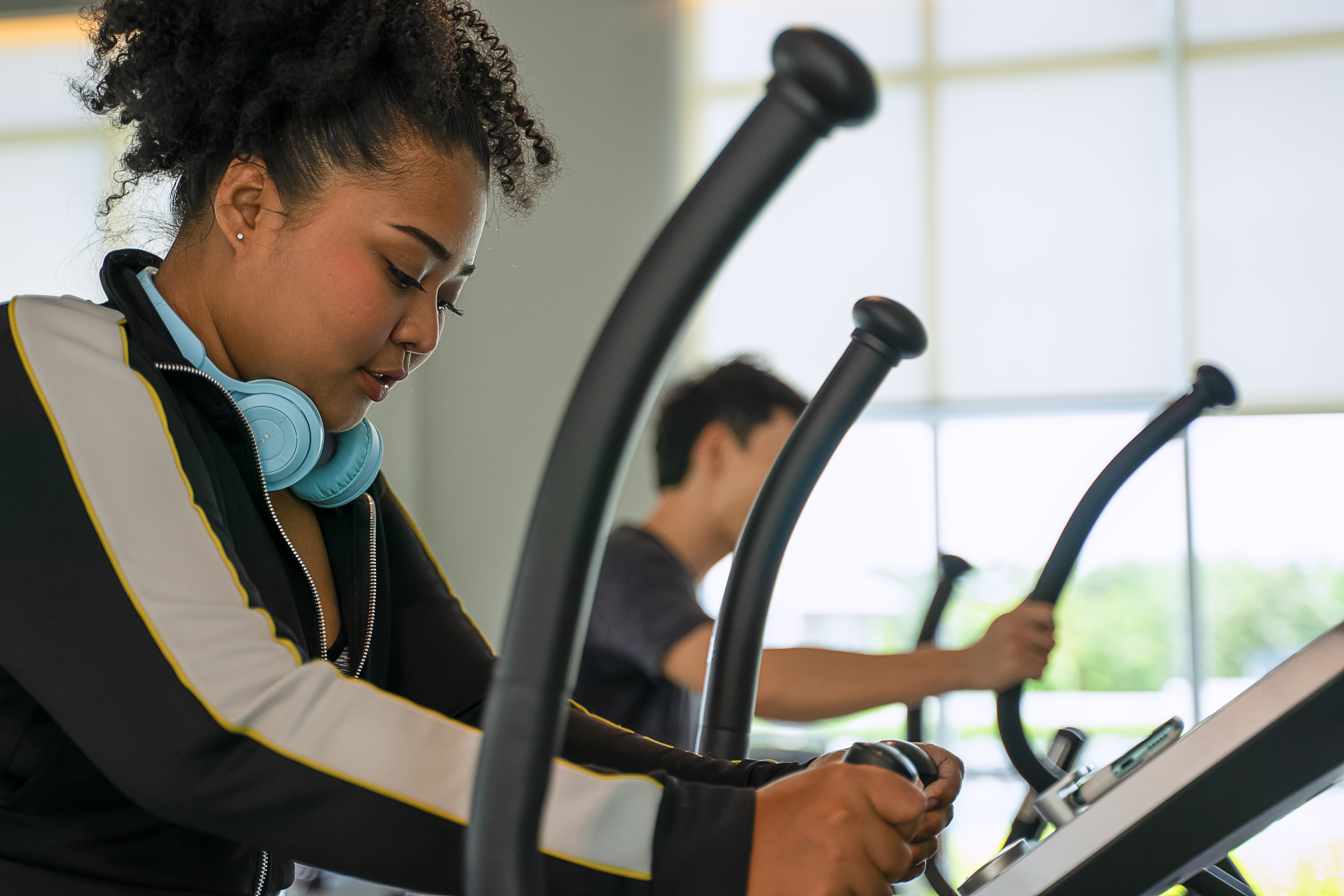
When heading to the cardio section of the gym, most people head to either the treadmill or the spin bike if they are searching for the quickest energy burn and biggest boost to their cardiovascular fitness. However, there is another machine (the elliptical trainer) that many often ignore. If you're looking for an effective, low-impact way to increase your fitness and lose weight, it might be time to add the elliptical to your repertoire.
Scientific studies find the elliptical trainer to be effective at increasing energy consumption and VO2 max, even compared to other cardio machines like a stationary bike and a treadmill.1
This article will dive into the numerous benefits of incorporating the elliptical into your routine and provide a clear guide on how to use it properly to maximize your workouts, even if you are a beginner.
Why the Elliptical Deserves a Spot in Your Routine
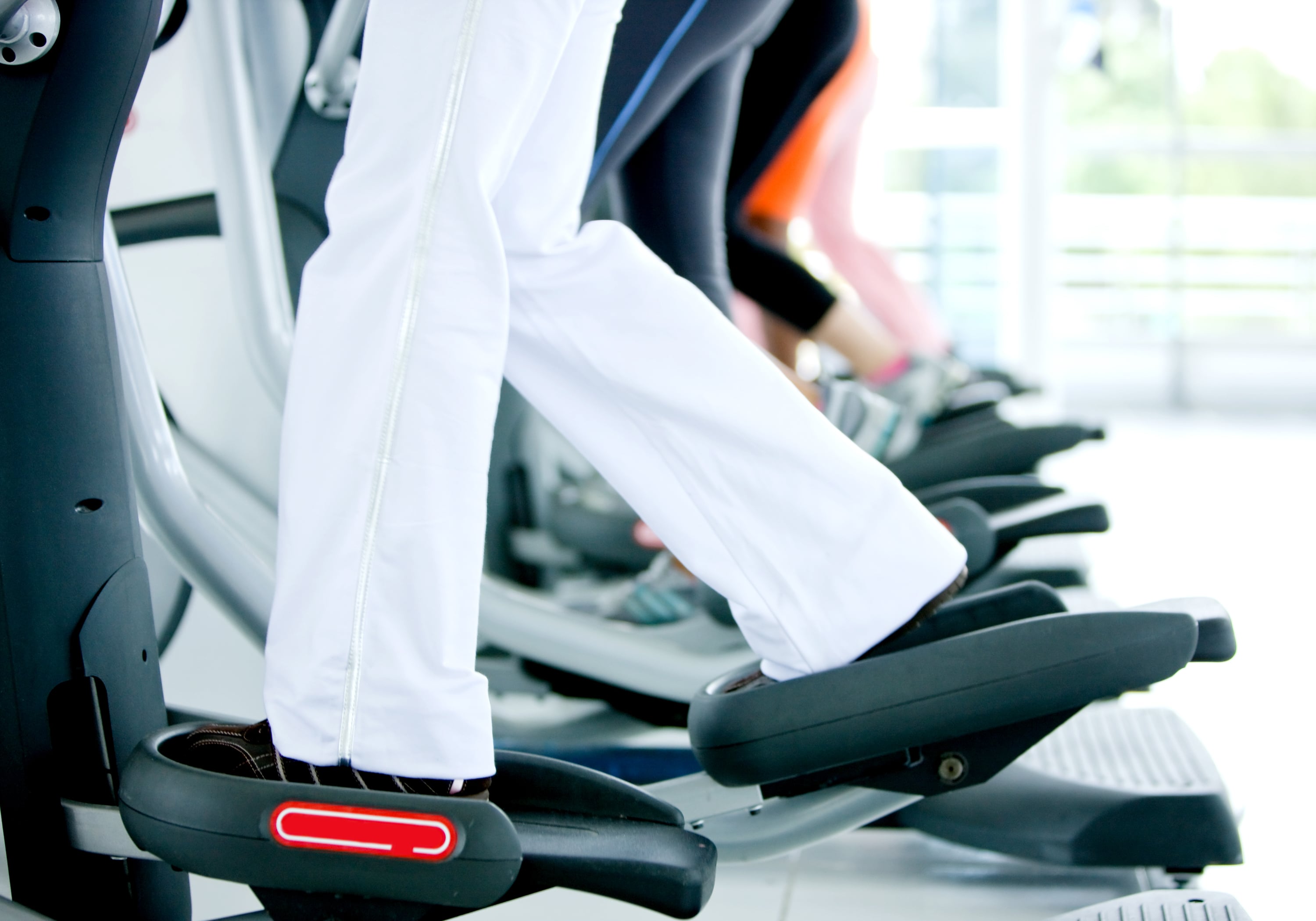
Incorporating the elliptical into your exercise routine is useful for anyone at any fitness level. Its mechanical design of upper- and lower-body movement effectively combines cardio and resistance for a total-body workout in one machine. Here are a few specific reasons why you should hop on the elliptical during your next workout session:
- Lower Joint Impact: The smooth, gliding motion keeps your feet firmly planted on the pedals, eliminating the high-impact stress on joints and soft tissues.2
- Combines Cardio and Resistance Training: You can engage your arms, shoulders, core, and lower body, resulting in a more efficient workout that burns more calories and develops similar muscular and cardio endurance as a treadmill workout at the same RPE.3
- Supports Stable Glucose Levels and Cardiovascular Health: Elliptical workouts have been found to target fat-burning heart rate zones (i.e., Zone 2) and to improve insulin sensitivity and glucose levels through more HIIT-style workouts.4
Step 1: Set Up the Machine Correctly
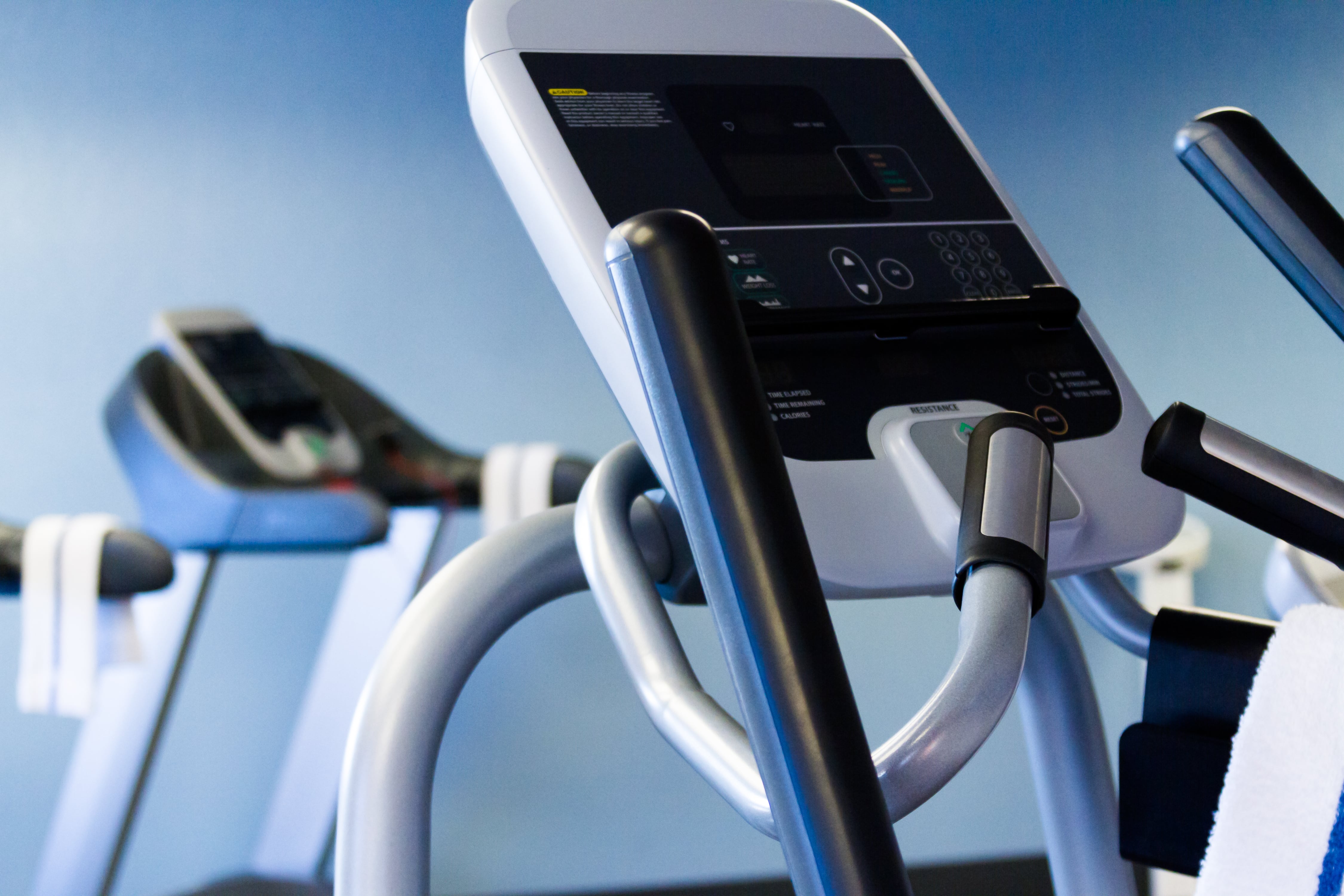
Start by adjusting the stride length and pedal position if your machine allows, ensuring a movement that feels natural and doesn't strain your hips or knees (i.e., too long of a stride). No worries if your machine is not adjustable, though, as your posture and muscle activation are the real drivers of success.
Next, set the resistance and incline to a level that is challenging yet manageable for your current fitness level, without compromising your form.
Lastly, check your posture during your workout. Refrain from slouching or rounding your shoulders and back; keep your pelvis stacked under your ribcage; and use a light grip on the handles. This posture will maximize muscle engagement while preventing unnecessary strain on your hips, spine, and wrists.
Step 2: Master Your Form
Once you’ve dialed in your setup and posture, understanding good elliptical form can ensure appropriate muscle activation while avoiding injury. Keep your feet in contact with the pedals and move smoothly through the full stride length, driving the movement from your core and glutes rather than your toes and arms.
Avoid leaning heavily on the handles or pulling excessively with your upper body, as this reduces the workload on your legs and core. Your legs drive the primary movement, while your hands assist with balance and engage the upper body.
Step 3: Start with a Warm-Up
A proper warm-up prepares your muscles and cardiovascular system for the workout ahead. Begin with five minutes of light pedaling at a very low resistance and moderate pace - think Zone 1-2 heart rates. This will improve blood flow to your working muscles and the joints involved in the movement.
During this time, focus on finding a comfortable, rhythmic stride while maintaining good form and posture before increasing the resistance or speed. Being physically and mentally ready allows for a safe transition to the heavier workload you're facing.
Step 4: Build Your Elliptical Routine
By varying your pace, resistance, and duration, you can tailor your session to hit any of the following goals:
- For Beginners: Start with 15–30 minutes at a steady pace with moderate resistance to build a foundational level of cardiovascular fitness and practice proper form without overexertion.
- For Fat Burning: Alternate periods of intense work with slower recovery paces. Try 1-minute sprints (high speed/resistance) followed by 2-minute recoveries (low speed/resistance) for a total of 15–20 minutes.
- For Endurance: Focus on maintaining a consistent pace and a moderate heart rate for at least 45 minutes to target cardiorespiratory stamina. This can make everyday activities easier and improve athletic performance.5
- For Strength: To build muscle strength, gradually increase the resistance and/or incline throughout your workout. You should feel a significant increase in muscle activation in your legs, similar to hiking a steep trail.
Step 5: Cool Down and Stretch
Just five minutes of a cool-down phase helps your body transition safely back to a resting state. Finish your session with low-intensity, very slow pedaling at minimal resistance to gradually lower your heart rate and prevent blood pooling. Dedicate a few extra minutes to foam roll major muscle groups like your hamstrings, quadriceps, calves, and upper back, as this helps maintain flexibility while reducing post-exercise muscle soreness.6
4 Common Mistakes to Avoid

Ensure you're getting the most out of every minute on the elliptical by avoiding these common mistakes:
- Slouching or leaning too heavily on the handles shifts the workload away from your core and legs, reducing calorie burn and increasing the risk of overuse injuries. Stand tall and upright, using a light grip for balance only.
- Not using the handles at all can also negatively affect your workout. Even with a light grip, actively pushing and pulling the levers, paired with equal push/pull of the legs, is key for an effective total-body workout.
- Setting the resistance and effort too low can make this specific exercise feel too easy, leaving your body unchallenged enough to achieve maximum calorie burn or aerobic gains. Make sure to target Zone 2-4 heart rates throughout your workout or on alternating workout days.
- Skipping the warm-up and cool-down phases may increase your risk of injury and muscle soreness. Always start slowly for 3–5 minutes and end with a slow cool-down of 5-10 minutes.
The Metabolic Bonus
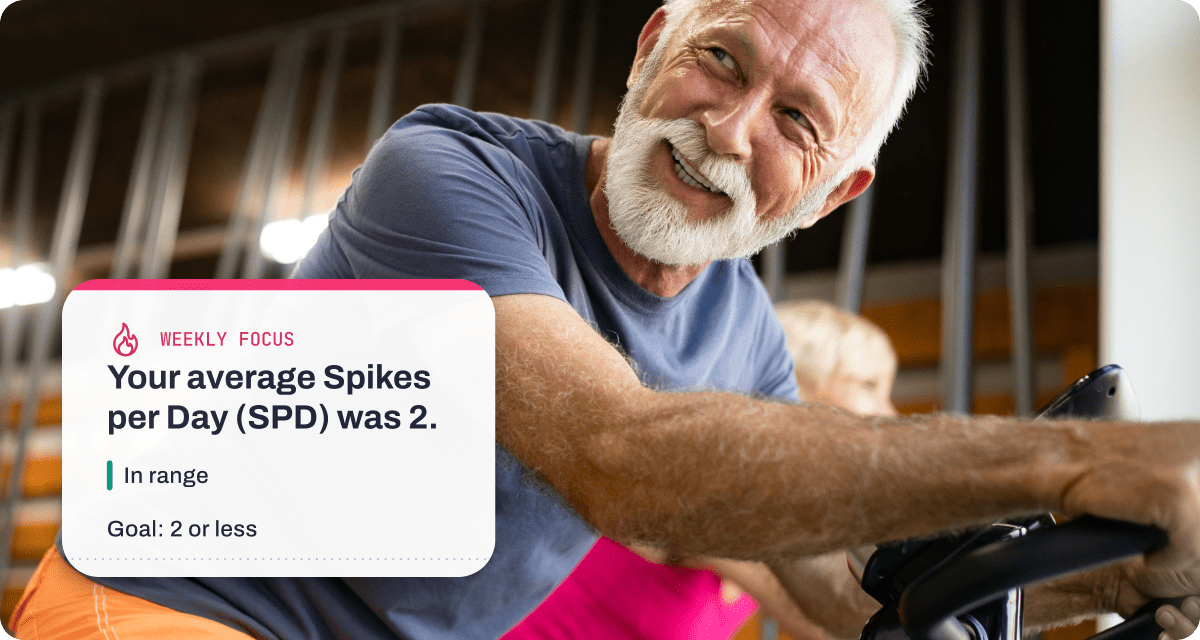
Using the elliptical to target metabolic health and adaptations can offer surprising results to many individuals. The steady-state cardio can effectively stabilize blood glucose levels and improve insulin sensitivity, both of which are crucial for overall metabolic health and energy levels.7
With Signos, you can actually see these stabilizing effects in real time. Watching your CGM line settle into the purple “optimal zone” during a steady elliptical session can help you confirm the exact pace, duration, or resistance that keeps your glucose most stable.
In addition, incorporating HIIT-style elliptical sessions is equally or, at times, more effective for improving metabolic health and achieving weight-loss goals, while remaining safe for those who are deconditioned and new to an exercise routine.8
Signos’ real-time alerts and movement nudges can help you time intervals perfectly, allowing you to experiment with different work-rest ratios and see which protocol keeps post-workout glucose spikes in the yellow range instead of drifting into the pink zone.
Experiments to Try With Signos on the Elliptical:
- Steady vs. Interval Comparison: Do a 20-minute steady-state session one day and a 20-minute HIIT session another. Compare how quickly your glucose returns to baseline afterward in your Weekly Insights.
- Resistance Test: Increase resistance by 2–3 levels for 5 minutes mid-workout and watch how your glucose responds. Many members see a slight rise (yellow) followed by a longer purple plateau afterward.
- Fasted vs. Fed Workout: Try the same workout after a balanced meal vs. fasted. Signos can show whether fasted cardio helps you stabilize more quickly or whether you need a small protein-forward snack.
- Post-Workout Glucose Drift: Log your cooldown routine and see whether extending your elliptical cooldown by 3–5 minutes reduces post-workout glucose rebounds.
For the best results, it’s essential to pair any workout regimen with balanced nutrition and hydration to fully optimize your body’s metabolic function and achieve all your fitness goals. Signos makes this easier by letting you track how different pre- and post-workout meals shift your glucose curve, helping you build a personalized fueling strategy that supports both performance and metabolic health.
The Bottom Line
Learning how to use the elliptical properly can transform it from a boring, simple cardio machine into a powerful tool for building endurance, boosting metabolic health, and improving athletic performance, with minimal impact on your body. By committing to good form, sufficient intensities, and consistency, you'll feel and see the difference in your physical health, making the elliptical your new favorite gym equipment.
Learn More
If you have more questions on improving your health, fitness, and nutrition, seek the expert advice of the Signos continuous glucose monitor and the Signos team. A continuous glucose monitor (CGM) can give you the insights to make smarter nutrition and exercise choices. The Signos app provides a unique, personalized program to help you reach your health goals.
Topics discussed in this article:
References
- Huang, Y. C., & Huang, T. S. (2017, November). A study of physiological responses to different forms of exercise. In 2017 IEEE 8th International Conference on Awareness Science and Technology (iCAST) (pp. 68-74). IEEE.
- Kaplan, Y., Barak, Y., Palmonovich, E., Nyska, M., & Witvrouw, E. (2014). Referent body weight values in over ground walking, over ground jogging, treadmill jogging, and elliptical exercise. Gait & posture, 39(1), 558–562. https://doi.org/10.1016/j.gaitpost.2013.09.004
- Brown, G. A., Cook, C. M., Krueger, R. D., & Heelan, K. A. (2010). Comparison of energy expenditure on a treadmill vs. an elliptical device at a self-selected exercise intensity. Journal of strength and conditioning research, 24(6), 1643–1649. https://doi.org/10.1519/JSC.0b013e3181cb2854
- Fex, A., Leduc-Gaudet, J. P., Filion, M. E., Karelis, A. D., & Aubertin-Leheudre, M. (2015). Effect of elliptical high intensity interval training on metabolic risk factor in pre-and type 2 diabetes patients: A pilot study. Journal of Physical Activity and Health, 12(7), 942-946.
- Dalleck, L. C., Kravitz, L., & Robergs, R. A. (2004). Maximal exercise testing using the elliptical cross-trainer and treadmill. Journal of Exercise Physiology Online, 7(3), 94-101.
- Dupuy, O., Douzi, W., Theurot, D., Bosquet, L., & Dugué, B. (2018). An evidence-based approach for choosing post-exercise recovery techniques to reduce markers of muscle damage, soreness, fatigue, and inflammation: a systematic review with meta-analysis. Frontiers in physiology, 9, 312968.
- Frampton, J., Cobbold, B., Nozdrin, M., Oo, H. T., Wilson, H., Murphy, K. G., ... & Chambers, E. S. (2021). The effect of a single bout of continuous aerobic exercise on glucose, insulin and glucagon concentrations compared to resting conditions in healthy adults: a systematic review, meta-analysis and meta-regression. Sports Medicine, 51(9), 1949-1966.
- Cassidy, S., Thoma, C., Houghton, D., & Trenell, M. I. (2017). High-intensity interval training: a review of its impact on glucose control and cardiometabolic health. Diabetologia, 60(1), 7-23.

.svg)



.webp)
.webp)




.svg)
.svg)
.svg)
.svg)
.svg)
.svg)
.svg)
