


Key Takeaways
- Small swaps can make a big difference: choose higher-fiber bread and protein in stuffing, thicken gravy with vegetables or xanthan gum instead of flour, and use natural sweeteners in pie to reduce glucose spikes.
- Pair and sequence meals with protein, fiber, vegetables, then carbohydrates to slow glucose absorption.
- Personalize your plate with feedback from a CGM to help you make swaps that work for your metabolic health.
that {{mid-cta}}
This Thanksgiving, you don’t have to choose between stable glucose levels and enjoying Thanksgiving favorites. With a few smart swaps, you can enjoy stuffing, gravy, and pie that satisfy cravings while keeping glucose steady.
In this article, we will share glucose-friendly Thanksgiving foods (such as stuffing, gravy, and pie), along with smart strategies for portion control and meal sequencing to support metabolic health at Thanksgiving and other holiday meals.
Glucose-Friendly Stuffing

A traditional stuffing side dish typically uses white bread (which lacks fiber) or cornbread, along with onions, celery, spices, and broth, providing approximately 34 g of carbohydrates, 2.5 g of fiber, and 8.6 g of protein in a ½ cup serving. Eating a whole cup of stuffing would add up to 68 g of simple carbohydrates, likely to spike your glucose level. 1
Tips for glucose-friendly stuffing modifications:
- Swapping refined white bread or cornbread for whole-grain options or higher-fiber bread can help slow the absorption of carbohydrates, thereby slowing the glucose spike.
- Look for Thanksgiving recipes that incorporate extra veggies and herbs rich in fiber, which can help reduce a spike in blood sugar.
- Add lean protein to the stuffing to help stabilize blood sugar levels.
- Portion about ¼ of your plate for stuffing and other carbohydrate-rich foods.
The following recipe swaps in a lower-carb store-bought bread, adds turkey sausage and pecans for more protein, and includes onion and celery for fiber, making this a glucose-friendly stuffing.
As is, one ½ cup serving provides 15 g of carbohydrate, 6.6 g of fiber, and 16 g of protein. The carb count can be further lowered by doubling the sausage, increasing the celery, and reducing the bread portion further.2
Low-Carb Stuffing (with Turkey Sausage and Pecans)
Ingredients
- 10 slices of purchased low-carb bread
- 1 medium onion, chopped
- 2 cups chopped celery (with leaves if available)
- 2 T butter
- 1 tsp. Poultry Seasoning
- 1 tsp. Dried Thyme (not ground Thyme)
- 1/2 tsp. Dried Sage (sometimes called Rubbed Sage)
- 1/2 tsp. salt
- fresh ground black pepper to taste
- 1 T olive oil
- 1 lb. ground turkey breakfast sausage
- 1/2 cup chopped pecans
- 3 T finely chopped Italian Parsley
- 1 egg
- 1 cup chicken broth
Instructions
- Cut the bread into cubes, place them on a baking sheet, and toast them in a preheated 300°F (150°C) oven for about 30 minutes, or until completely dry.
- When you remove the bread cubes, increase the oven temperature to 375°F (190 °C) and spray a 9" x 13" baking dish with nonstick spray.
- While the bread toasts, chop up the onion and celery to make two cups.
- Melt the butter in a large frying pan, then cook the onions and celery over medium heat for about 5 minutes. Then add Poultry Seasoning, Dried Thyme (not ground thyme), and Dried Sage (sometimes called Rubbed Sage), salt, and pepper. Cook for a few minutes more.
- Put the onions and celery into a large mixing bowl.
- Add olive oil to the pan, then squeeze the turkey breakfast sausage out of the roll. Cook the sausage over medium-high heat until it's fully cooked, all liquid has evaporated, and it's starting to brown, about 10 minutes.
- While the sausage cooks, chop the pecans and wash and finely chop the parsley
- Add sausage to the bowl with the onions and celery. Then stir in the chopped pecans and parsley.
- Beat the egg and add it to the chicken broth.
- Add the broth-egg mixture to the stuffing ingredients a little at a time, stirring to combine, until all the broth is added. (If you want wet stuffing that holds together, use a bit more broth and another egg.)
- Place the stuffing in the baking dish and cover it. Cook for 15 minutes.
- Then remove the lid or foil and cook uncovered 15 minutes more, or until as brown as you prefer.
- Serve the low-carb stuffing hot, of course, with gravy!
Keep reading for a healthier gravy to top this glucose-friendly stuffing.
Healthy Gravy That Supports Glucose Control
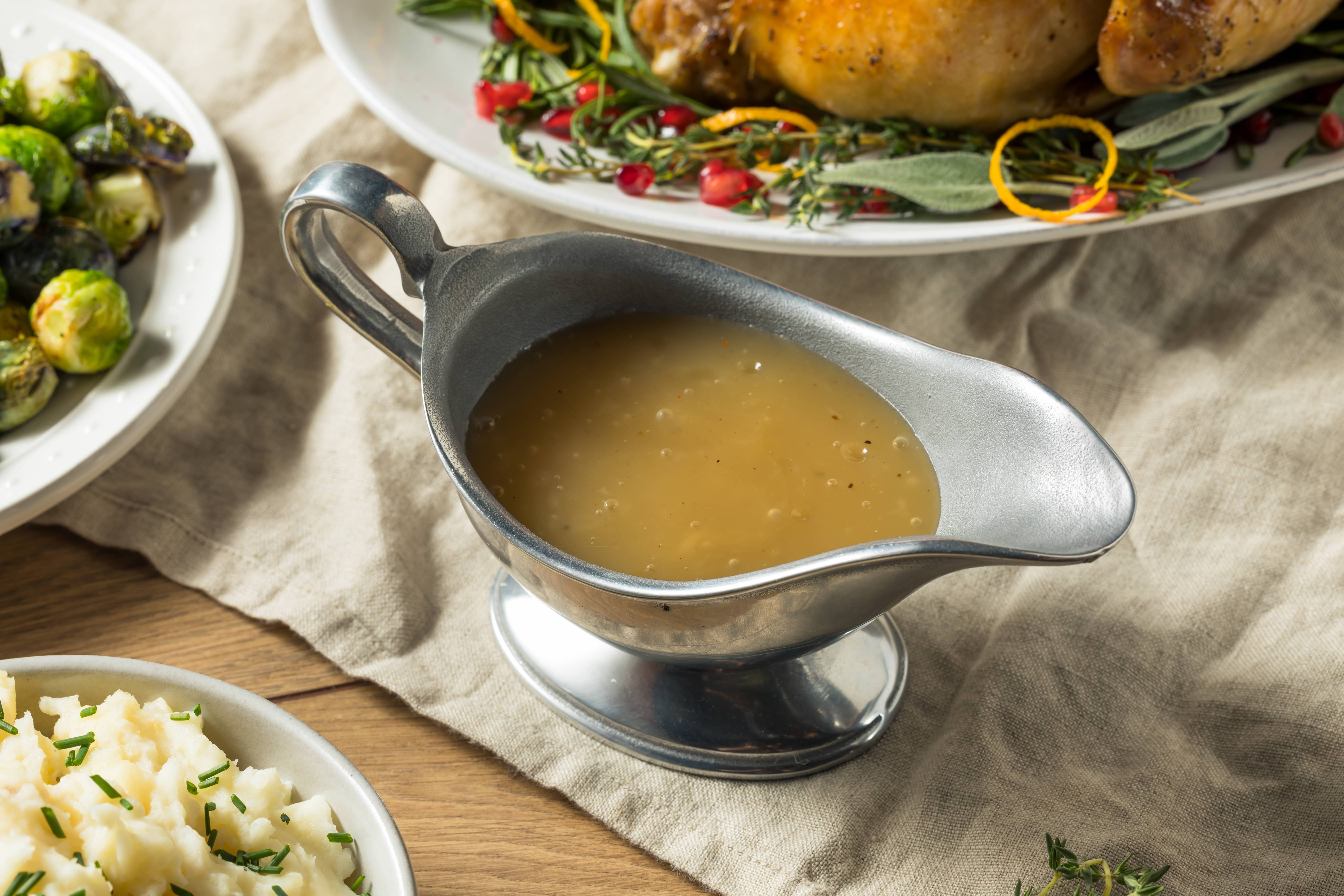
Traditional gravy is thickened with flour or cornstarch. Liquid carbohydrates are often absorbed more quickly and can raise glucose levels more rapidly than solid forms of carbohydrates.3
Tips for healthier gravy changes:
- Use broth and pan drippings wisely. If you need to reduce fat and sodium, use low-sodium, low-fat broth instead of the drippings.
- Use gravy as a drizzle, not a drench.
- Avoid using excessive flour or cornstarch; instead, opt for thickening alternatives, such as pureed vegetables, arrowroot, or xanthan gum.
- Simmering the gravy for a longer period will also naturally thicken it as the water evaporates.
- Use flavor boosters: herbs and spices without added sugar.
The following recipe yields 12 servings: a ⅓-cup serving has 2 g of carbohydrates, 1 g of fiber, and 1 g of protein.4 Classic turkey gravy has 4.2 g of carbohydrates, 0.1 g of fiber, and 1.5 g of protein when made with drippings, broth, butter, and flour.5
Healthier Gravy
Ingredients
- 1/4 cup butter, unsalted
- 2 cups low-sodium chicken broth (or beef, vegetable, etc.)
- 1 cup turkey pan drippings (or beef, lamb, or chicken)
- 1 1/2 teaspoon soy sauce or tamari
- 1/2 teaspoon allulose (lower-carbohydrate sweetener)
- 1/2 teaspoon salt, to taste
- 1 teaspoon pepper, to taste
- 1/2 teaspoon xanthan gum (thickener instead of flour or cornstarch)
Instructions
- In a small saucepan, add the butter and heat over medium. Once melted, add the broth and turkey pan drippings, stirring until combined and smooth.
- Once the mixture begins to simmer, reduce the heat to low. Add the soy sauce, sweetener, salt, and pepper, then simmer for 10 minutes. Whisk in the xanthan gum, then continue simmering for 10 minutes, until the mixture thickens.
- Remove the gravy from the heat and let it sit for 2 minutes before serving over your favorite meat, poultry, seafood, or vegetables.
Try this diabetes-friendly gravy at your holiday gathering for a burst of flavor and stable blood sugar levels.
Dessert Without the Spike: Glucose-Friendly Pie

Dessert is often loaded with simple sugars and carbohydrates that are notorious for spiking blood glucose levels. The crust and pie filling are loaded with fast-absorbing carbohydrates, including sugar, flour, and corn syrup.
For example, a slice of traditional pecan pie provides 514 calories, 69g of carbohydrates (38g of sugars), 2g of fiber, and 35g of protein. Ingredients include 1 cup of sugar, 1 cup of corn syrup, and a pie crust.6
Tips for glucose-friendly pie swaps:
- Replace the crust with a nut-based or whole-grain option.
- Alter the filling with naturally sweetened fruit or minimal added sugar.
- Pair your pie with dinner (or shortly after) so the protein and healthy fats from the meal can help to slow glucose absorption. Or opt for a pie that contains protein and fat (like pecan pie, but slightly altered).
Pumpkin pie is a healthy Thanksgiving dessert across the board, as it has a single crust and utilizes a nutrient-rich vegetable for its filling. The following pumpkin pie recipe is naturally sweetened and serves nine. Each slice contains 229 calories, 28 g of carbohydrates (13 g of sugars), 2.8 g of fiber, and 4.6 g of protein.7 This recipe's carbohydrates could be further reduced by substituting a low-carb or nut-based pie crust, or omitting the crust altogether, simply pour into a greased pie pan and bake.
Best Ever Healthy Pumpkin Pie
Ingredients
- 1 pie crust (store-bought or homemade, swap for a nut-based option)
For the pumpkin filling:
- 1 (15-ounce) can pumpkin puree
- 3 eggs
- ¼ cup pure maple syrup
- ¼ cup coconut sugar (or organic cane sugar)
- ¼ cup unsweetened almond milk (any milk will work)
- 1 teaspoon vanilla extract
- 1 ½ teaspoons cinnamon
- ½ teaspoon nutmeg
- ½ teaspoon ground ginger
- ½ teaspoon allspice
- ¼ teaspoon salt
Instructions
- Make pie crust as directed.
- Preheat oven to 350°F.
- Make the filling: In a large bowl, add the pumpkin puree, eggs, pure maple syrup, coconut sugar (or regular sugar), almond milk, vanilla, cinnamon, nutmeg, ground ginger, allspice, and salt. Mix until well combined and completely smooth. Pour into a pie pan.
- Bake for 50-60 minutes, or until the filling is no longer jiggly. Check the pie every 20 minutes to ensure the crust isn't burning. If the pie is getting a little too golden brown, simply cover the edges with foil or a pie shield.
- Allow the pie to cool for at least an hour before serving. The pie should be kept in the fridge once it's completely cool. Top with whipped cream or ice cream; store the pie in the fridge.
Consider this pumpkin pie for your Thanksgiving meal this year.
Pairing and Meal Sequencing
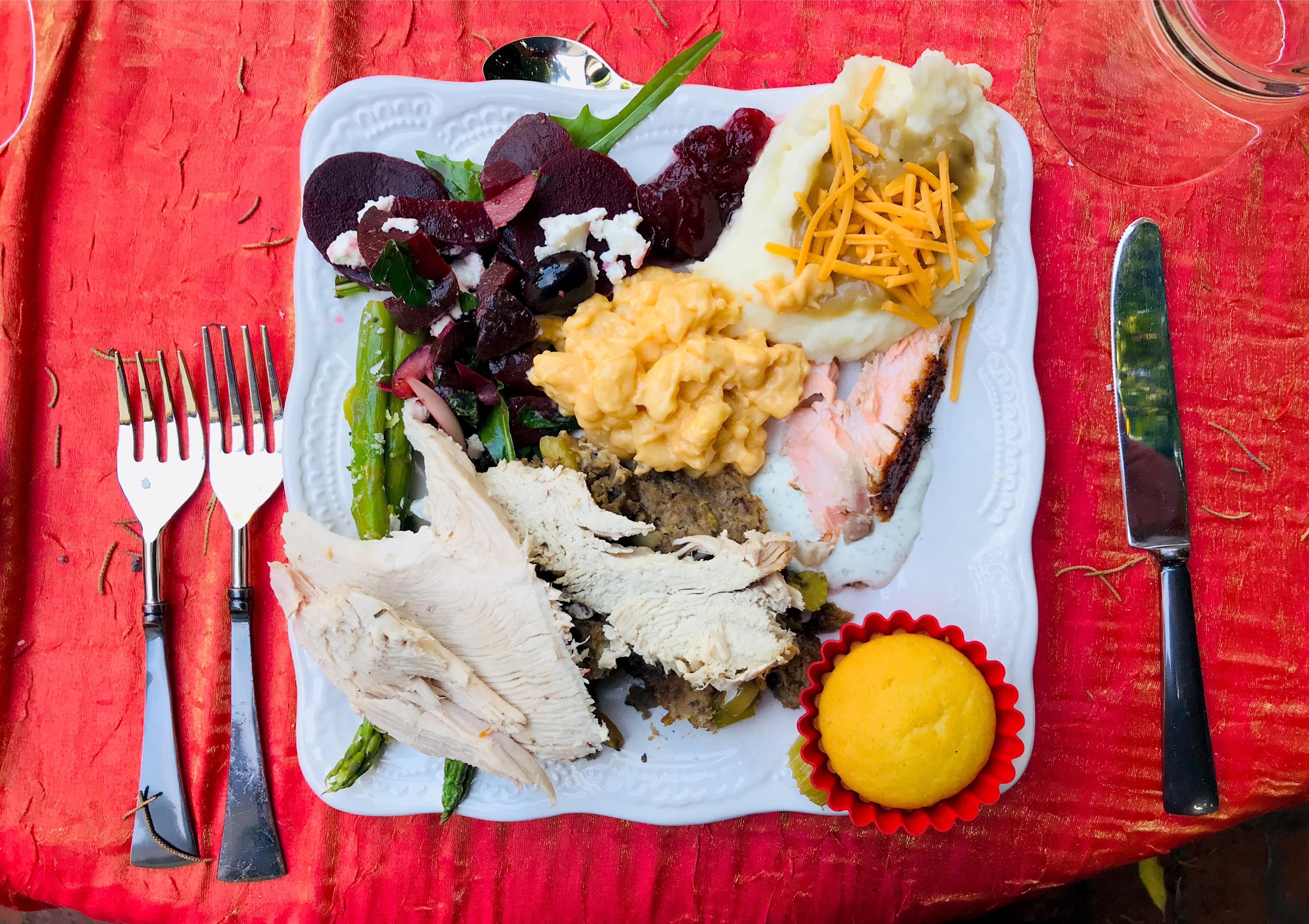
Pairing meal components and eating your meal in a particular order can help glucose enter your bloodstream more gradually, helping you avoid the rollercoaster of spikes, crashes, and hunger.
- Start meals with protein and vegetables, then add carbohydrates, and finish with dessert to slow glucose absorption.
- Carbohydrates eaten alone can cause a blood sugar spike.
- Protein, fat, and fiber help slow the entry of glucose into your bloodstream.
- On Thanksgiving, this might look like starting with turkey, Brussels sprouts, green beans, or salad, then the stuffing or mashed potatoes with gravy, followed by pumpkin pie.
- Combine dishes strategically to stabilize your post-meal glucose levels.
- Consider smaller portions of carbohydrate-rich foods, such as stuffing, sweet potatoes, rolls, and cranberry sauce, and larger servings of turkey, vegetables, and salad.
- Adding a post-meal walk or an outdoor game of football with friends and family can help reduce the glucose spike.
How Signos Helps You Enjoy Holiday Favorites
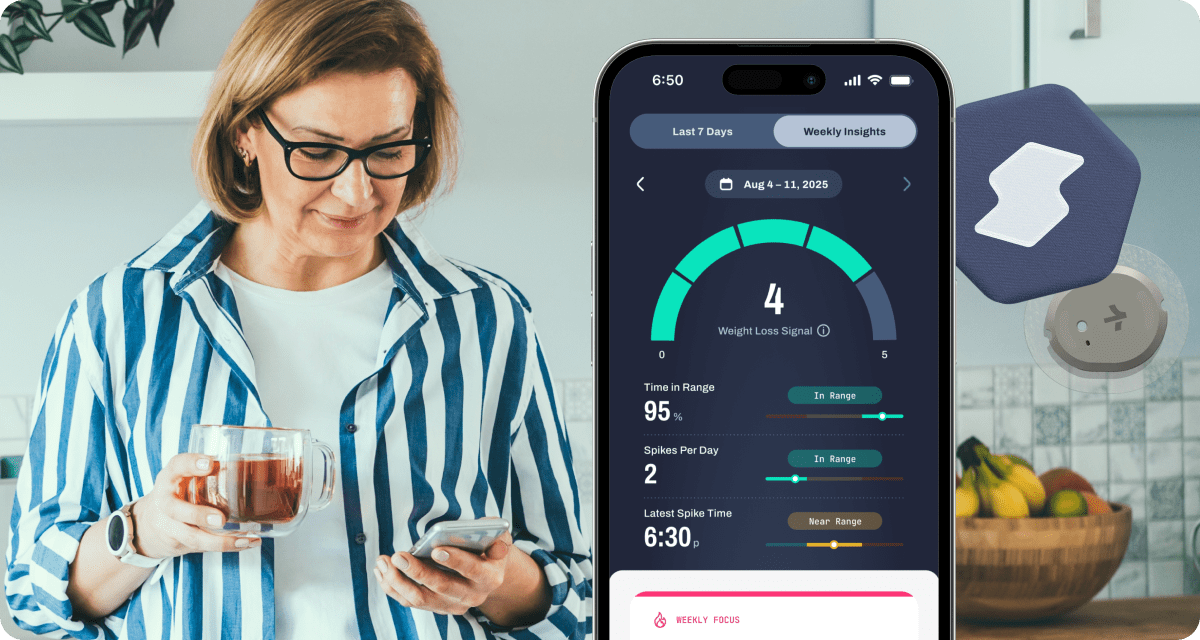
The holidays are full of delicious food, and for many people, they can also bring post-meal crashes, sluggishness, and surprise sugar spikes. Signos helps you enjoy your favorite dishes and stay energized by showing you exactly how your body responds to holiday meals in real time. With personalized glucose insights, you can make small, smart tweaks that keep you feeling great throughout the season.
How Signos Supports You on Thanksgiving (and Beyond)
With Signos, you can:
- See your real-time glucose responses to stuffing, gravy, pie, mashed potatoes, or any holiday staple, so you can understand which dishes help you feel satisfied, and which ones may lead to a spike.
- Discover which recipe tweaks work for your body, like adding more protein, choosing higher-fiber sides, or balancing a carb-heavy dish with non-starchy veggies.
- Personalize your meal timing, portions, and pairings so you can enjoy your favorites without the energy roller coaster. By learning your patterns, you can adjust before, during, and after meals to stay in your optimal zone.
These features help you make confident choices on Thanksgiving, at holiday parties, or any celebration that comes your way. A CGM isn’t just for special occasions; it’s a year-round tool that keeps you energized, informed, and in control of your metabolic health.
Holiday Experiments to Try with Signos
Here are optional, easy experiments to get even more from your CGM this season:
- Protein-First Test: Eat a few bites of turkey or another protein before diving into sides. Watch how this simple shift can soften or delay a glucose spike.
- Fiber Boost Swap: Try adding a fiber-rich side (like roasted Brussels sprouts or a leafy salad) to your plate and compare the glucose curve to your usual holiday meal.
- Post-Dinner Walk Challenge: Take a 10-minute walk after your meal and observe how quickly your glucose returns to your optimal range.
Whether you’re savoring Thanksgiving dinner or celebrating into the New Year, Signos gives you personalized metabolic insights that help you stay steady, energized, and fully present for the moments that matter.
The Bottom Line
Glucose-friendly Thanksgiving foods and meals are all about balance, not restriction. With a few smart swaps, mindful portions, and tools like Signos to guide you, you can enjoy your favorite Thanksgiving dishes (stuffing, gravy, and pie) while keeping your glucose steady and your energy strong.
Learn More With Signos’ Expert Advice
A CGM can uncover blind spots in your eating habits and help you navigate high-risk situations, such as holiday gatherings, to improve your overall health.
Learn more about glucose levels and tracking on the Signos blog, written by health and nutrition experts.
Topics discussed in this article:
References
- https://www.thekitchn.com/how-to-make-the-very-best-thanksgiving-stuffing-237564
- https://kalynskitchen.com/low-carb-stuffing-with-sausage-and-pecans/
- https://wsro.org/about-sugar/digestion-absorption
- https://thebigmansworld.com/keto-gravy/#wprm-recipe-container-51824
- https://www.thekitchn.com/how-to-make-quick-turkey-gravy-thanksgiving-cooking-lessons-from-the-kitchn-161016
- https://www.allrecipes.com/recipe/173315/classic-pecan-pie/
- https://www.ambitiouskitchen.com/best-ever-healthy-pumpkin-pie/

.svg)










.svg)
.svg)
.svg)
.svg)
.svg)
.svg)
.svg)
