


Key Takeaways
- Bone broth is one of the most popular foods for metabolic health. With so many options available, we’ve compiled the best bone broths of 2025.
- Store-bought bone broth is a great way to increase protein intake and stabilize blood glucose levels.
that {{mid-cta}}
Bone broth gets a lot of attention for digestion, collagen, and satiety, but from a metabolic standpoint, its real value is simpler: protein, timing, and predictability.
Not all bone broths deliver those equally. Below, we break down the best bone broths of 2025, selected with registered-dietitian criteria that prioritize protein density, ingredient quality, and glucose-friendly profiles.
This isn’t about trends. It’s about choosing a broth that actually supports stable energy and blood sugar.
What Makes a Bone Broth “Worth It?”

Dietitians evaluate bone broth the same way they evaluate any functional food: does it deliver protein efficiently, without unnecessary glucose noise?
Key criteria:
- 8–10+ g protein per cup
- Low to moderate sodium
- No added sugars or starches
- Grass-fed, pasture-raised, or organic bones
- Slow-simmered for collagen extraction
- Minimal, whole-food ingredients (e.g., sea salt)
- Shelf-stable without heavy preservatives
The 7 Best Bone Broths of 2025

Bone broth isn’t one-size-fits-all. Each option below stands out for a specific reason.
1. Best Overall: Bare Bones Organic Beef Bone Broth
Grass-fed beef bones deliver 20 g protein per 16 oz. Sodium is higher (540 mg), but splitting into two cups still provides 10 g protein for 40 calories. A solid option when you want protein without a full meal.
2. Best Chicken Broth: Kettle & Fire Classic Organic Chicken Bone Broth
Made with organic vegetables and free-range chicken bones. 19 g protein per container. Sodium is high at full volume, but manageable when split into two servings. Works well as both a sippable broth or recipe base.
3. Best for Metabolic Health: Dr. Kellyann Classic Beef Low-Sodium Bone Broth
Not all broths are equally glucose-friendly. This one stands out with 31 g protein per 16.9 oz and just 290 mg sodium. High protein, low carb, lower sodium, a strong option for blood sugar stability.
4. Best Collagen Content: Ancient Nutrition Bone Broth Collagen
A powdered option that mixes easily into soups or sauces. 14 g protein per scoop with only 110 mg sodium. Useful if you want collagen support without a liquid broth format.
5. Best Flavor: Brodo Broth Co’s Organic Spicy Nonna Bone Broth
Garlic and chili add complexity without sugar. 10 g protein, 50 calories, and moderate sodium. Designed for sipping, but flexible enough for cooking.
6. Best Budget-Friendly: Kitchen Basics Chicken Bone Broth
Under $2 for an 8 oz carton. 10 g protein, higher sodium (370 mg), but accessible and versatile for both sipping and cooking.
7. Best Shelf-Stable Option: Swanson’s Sipping Chicken Bone Broth
Microwavable, portable, and convenient. 10 g protein, higher sodium (460 mg). Best for occasional use when convenience matters most.
Bone Broth Benefits for Metabolic & Glucose Health
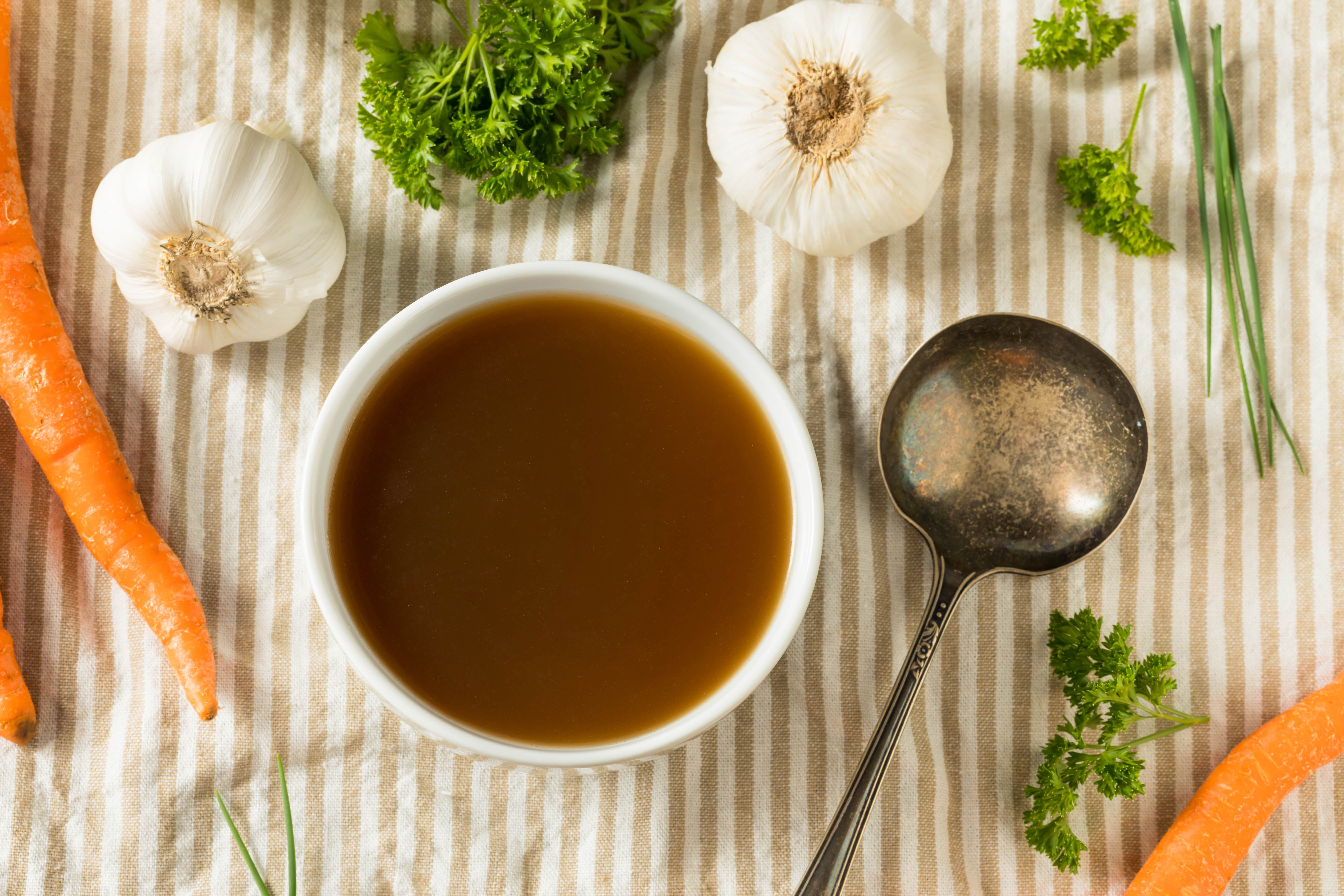
Bone broth doesn’t work because it’s trendy. It works because of how your metabolism responds to protein, hydration, and timing.
Protein before meals matters.
Starting a meal with protein has been shown to slow digestion and blunt post-meal glucose rises. Bone broth delivers protein in a low-calorie, low-carbohydrate form, which can help reduce the size and speed of glucose spikes. This effect often translates into greater fullness and fewer cravings later in the day, especially for quick, sugary foods.
Collagen supports movement consistency.
Bone broth is rich in collagen and amino acids that support joint and connective tissue health. While this doesn’t directly change glucose, it supports something just as important: the ability to move regularly. Consistent movement (walking, strength training, or light activity) plays a key role in improving insulin sensitivity and overall metabolic health.
Electrolytes support hydration and muscle function.
Sodium and potassium help regulate fluid balance and muscle contractions. When hydration is off, glucose levels can appear more volatile. Broth provides electrolytes in a form that’s easy to absorb, which may help support steadier readings, especially around workouts or long fasting windows.
Warm, savory intake reduces sugar-driven choices.
When energy dips, many people instinctively reach for fast carbohydrates. A warm, savory option like bone broth can satisfy hunger cues without triggering a glucose spike, helping break the cycle of sweet snacks followed by crashes.
Bottom line: bone broth works best when it replaces something less metabolically supportive, like a sugary drink, processed snack, or low-protein starter.
How Signos Helps You See Your Bone Broth Response

With continuous glucose monitoring, you don’t have to rely on general advice. You can see how bone broth affects your body.
Signos helps you:
- Log broth type, timing, and protein content so you can evaluate differences between products
- Compare glucose patterns on days you start meals with broth versus days you don’t
- Identify repeatable trends, such as smaller post-meal spikes or steadier glucose curves when protein comes first
Over time, these patterns make it easier to decide whether broth is a helpful daily habit or better used strategically.
Experiments to Try With Bone Broth
Using CGM data, you can turn broth into a simple metabolic experiment:
- Timing test: Sip broth 15–20 minutes before meals vs. alongside your meal and compare post-meal glucose responses
- Protein source test: Compare chicken vs. beef broth and note differences in fullness, energy, and glucose stability
- Sodium test: Try higher- vs. lower-sodium broths and observe hydration, workout performance, and glucose variability
- You can also track Latest Spike Time (LST) to see whether starting your day with protein-rich broth shifts glucose peaks earlier and creates a more stable daily pattern.
Choosing the Right Bone Broth for Your Goals
Not every broth serves the same purpose. The right choice depends on what you’re optimizing for:
- Collagen support: Look for slow-simmered, gelatin-rich broths that thicken when cooled
- Metabolic stability: Prioritize high protein, low sodium, and zero added sugars or starches
- Convenience: Shelf-stable cartons, powders, or ready-to-sip formats make consistency easier
- Taste: Roasted or seasoned broths can improve adherence; just avoid sweeteners or hidden carbs
The best bone broth isn’t the “healthiest” on paper. It’s the one you’ll use consistently and intentionally, in a way that supports steadier glucose and better daily decisions.
The Bottom Line
Bone broth isn’t a wellness shortcut. It’s a high-protein, low-glucose tool that can support satiety, stable energy, and metabolic consistency when used intentionally. The right broth fits your taste, routine, and data, not just a trend.
Learn More With Signos’ Expert Advice
Signos helps improve overall health by combining blood glucose tracking with support from registered dietitians and smart food logging. To learn more about the role glucose plays in health, visit Signos’ blog.
Topics discussed in this article:
References
- Touhamy II, S., Palepu, K., Karan, A., Hootman, K.C., Riad, J., Sripadrao, S., Zhao, A.S., Giannita, A., D’Angelo, D., Alonso, L.C., Aronne, L.J., & Shukla, A.P. (22 January, 2025). Carbohydrates-last food order improves time in range and reduces glycemic variability. Diabetes Care, 48(2): e15–e16. https://doi.org/10.2337/dc24-1956
- Wang, H. (2021). A review of the effects of collagen treatment in clinical studies. Polymers, 13(22), 3868. https://doi.org/10.3390/polym13223868
- Medline Plus. (n.d.). Fluid and electrolyte balance. https://medlineplus.gov/fluidandelectrolytebalance.html

.svg)










.svg)
.svg)
.svg)
.svg)
.svg)
.svg)
.svg)
